

Freight management is the process of planning, executing, and optimising the movement of goods across a shipper's network - from booking and dispatch to tracking, exception handling, and freight settlement.
A freight management system is a process or software used to manage the transportation of goods efficiently and cost-effectively. It helps businesses plan shipments, track deliveries, manage carriers, and reduce transportation costs. Modern businesses rely on freight management in logistics to improve shipment visibility, optimise carrier selection, and reduce transportation delays.
A good freight management system helps businesses:
With modern transportation management solutions and TMS, businesses can improve supply chain visibility and make freight operations faster and more reliable.
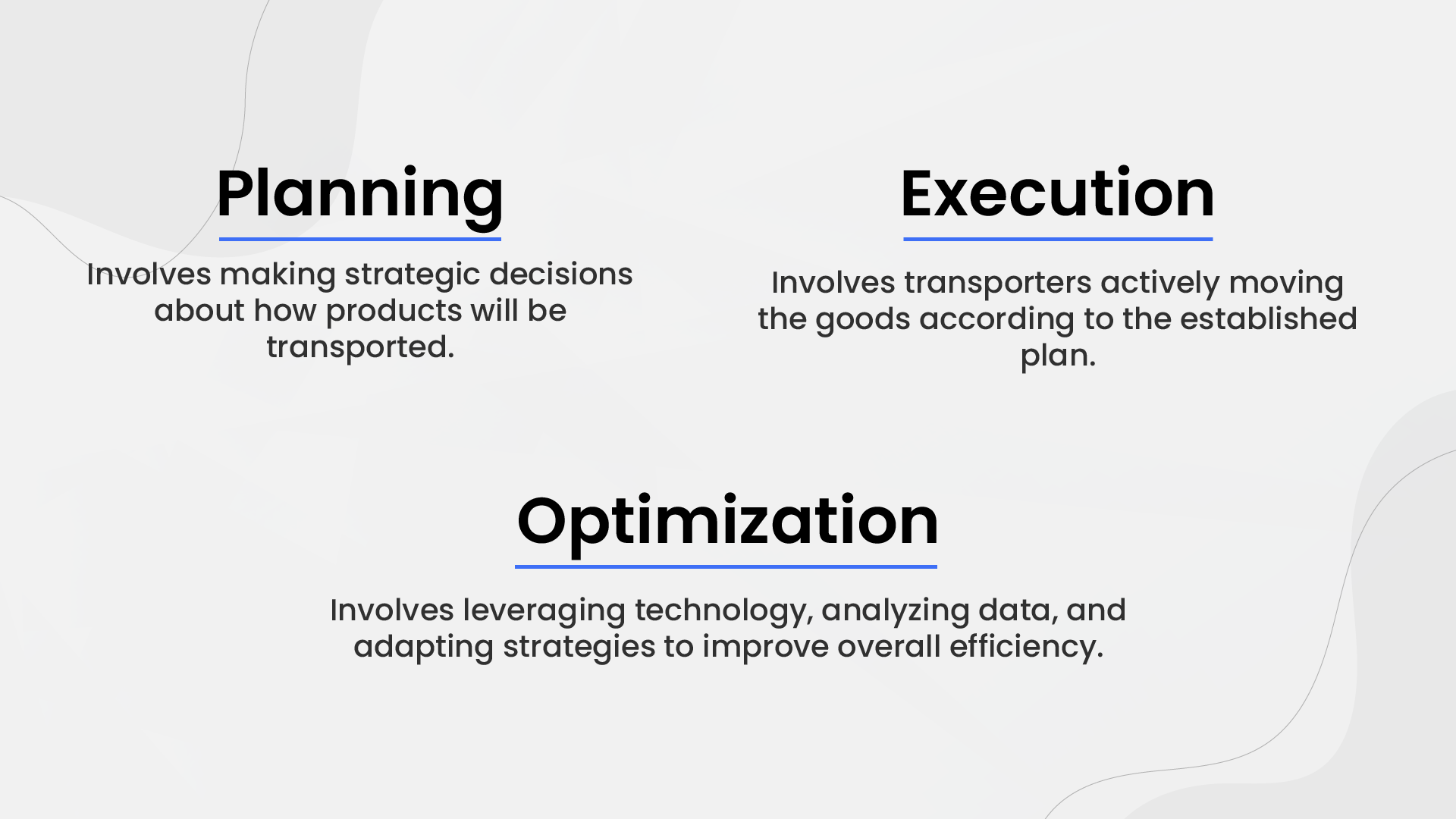
The freight management process includes planning, executing, and improving transportation operations to ensure smooth and cost-effective delivery of goods.
The planning stage is the foundation of successful freight management. In this phase, businesses decide how goods will be transported in the most efficient way.
This includes:
Using modern transportation management solutions and TMS software helps businesses make better logistics decisions and improve delivery planning.
Effective freight planning helps businesses balance transportation costs, delivery speed, and operational efficiency. Advanced TMS platforms now support automated freight planning for both domestic and international logistics operations.
Once the planning is complete, the execution phase begins. This is where goods are transported according to the planned schedule.
Key activities include:
Modern freight management solutions help businesses improve shipment visibility, reduce transportation delays, and ensure efficient freight movement.
Optimisation is an important part of freight management. Businesses continuously improve logistics operations to increase efficiency and lower transportation costs.
This process includes:
Advanced TMS and digital freight management solutions help companies streamline supply chain operations and improve overall business performance.
Effective freight management is a collaborative process that involves multiple stakeholders working together to ensure smooth transportation, timely deliveries, and efficient supply chain operations. Modern freight management solutions and transportation management solutions help these stakeholders improve coordination, visibility, and logistics performance.

Shippers are businesses or individuals who initiate the transportation process. These may include manufacturers, wholesalers, distributors, and retailers responsible for preparing goods for shipment.
Their responsibilities include:
Shippers use advanced TMS and freight management solutions to improve shipment planning and reduce transportation delays.
Carriers are responsible for physically transporting goods using trucks, ships, trains, or airplanes. They play a major role in ensuring safe and timely delivery.
Key responsibilities include:
Modern transportation management solutions help carriers optimise routes, reduce fuel costs, and improve delivery efficiency.
Freight forwarders act as intermediaries between shippers and carriers. They manage the complete shipping process and help businesses simplify logistics operations.
Their services include:
Freight forwarders often use digital freight management systems to improve shipment visibility and operational efficiency.
Logistics providers offer additional supply chain services that support transportation and delivery operations.
These services may include:
Using smart freight management solutions helps logistics providers streamline supply chain operations and improve customer satisfaction.
Customs brokers are important for international shipping and cross-border transportation. They ensure shipments comply with import and export regulations.
Their responsibilities include:
Modern TMS platforms help customs brokers improve documentation accuracy and shipment tracking.
Consignees are the final recipients of the goods being shipped. They depend on efficient freight management for timely and accurate deliveries.
Consignees benefit from:
Advanced transportation management solutions improve customer experience through better delivery visibility.
Government agencies regulate freight transportation to ensure compliance with national and international laws.
Their role includes:
The growing India freight management system market is also influenced by government initiatives focused on digital logistics and supply chain modernization.
Technology providers develop software and digital tools that improve freight and logistics operations.
These solutions include:
Modern freight management solutions and TMS platforms help businesses improve decision-making, reduce operational costs, and enhance supply chain efficiency.
Insurance companies provide protection against risks associated with freight transportation.
Coverage may include:
Insurance support is an important part of a reliable freight management system, helping businesses reduce financial risks during transportation.
An effective freight management process helps businesses optimise transportation costs, improve shipment visibility, and ensure timely deliveries. The process typically includes the following six steps:
A successful freight management system is not just about moving goods from one place to another. It is about managing transportation efficiently, reducing costs, improving delivery speed, and ensuring smooth supply chain operations.
Modern freight management solutions and transportation management solutions help businesses improve logistics planning, shipment tracking, warehouse operations, and overall freight efficiency.

Choosing the right carrier is one of the most important parts of freight management. A reliable carrier helps ensure safe and on-time delivery of goods.
Things to consider while selecting a carrier:
Using modern TMS and transportation management solutions helps businesses compare carriers and select the best logistics partner. Many businesses also evaluate services offered by VRL freight management providers and other major logistics companies to improve delivery reliability and freight efficiency.
Route optimisation helps businesses reduce transportation costs and improve delivery speed.
Important factors in route planning include:
Advanced freight management solutions use real-time tracking and analytics to improve route planning and delivery efficiency.
Reducing lead time is also important for faster deliveries and better customer satisfaction.
Negotiating freight rates helps businesses control transportation costs and improve profitability.
Best practices include:
Modern freight management systems help businesses track freight pricing and improve carrier negotiations.
Managing transportation expenses is an important part of freight management.
Key activities include:
Using digital TMS platforms improves billing accuracy and financial visibility.
Proper documentation helps businesses avoid delays and maintain legal compliance during transportation.
Important documents include:
Modern transportation management solutions help automate documentation and reduce compliance errors.
Sometimes shipments may get damaged, delayed, or lost during transportation. Claims management helps businesses recover losses quickly.
Types of freight claims include:
A reliable freight management system helps businesses track issues and process claims efficiently.
Real-time shipment tracking improves visibility and customer communication.
Key tracking features include:
Modern freight management solutions and TMS software provide real-time freight visibility and improve supply chain transparency.
International shipping involves different trade laws, tariffs, and regulations.
Businesses should focus on:
The growing India freight management system market is encouraging businesses to adopt digital tools for better compliance management.
Warehouse management plays an important role in smooth freight operations and inventory control.
Best practices include:
Integrated freight management solutions help businesses improve warehouse efficiency and faster order fulfilment.
Data and analytics help businesses make smarter logistics decisions.
Important areas to track include:
Modern transportation management solutions use predictive analytics and automation to improve freight planning and supply chain performance.
Load planning helps businesses improve transportation efficiency and reduce delivery costs.
Important factors include:
Efficient load planning using TMS improves delivery timelines and transportation productivity.
Modern freight management systems help businesses simplify logistics operations, improve delivery performance, and reduce transportation costs. Today, both global logistics providers and freight companies in India are using digital freight technologies to improve customer experience and supply chain visibility.
One of the biggest advantages of a freight management system is real-time shipment tracking. Businesses can monitor freight movement from dispatch to final delivery, improving visibility across the supply chain.
This helps companies:
Modern TMS platforms provide better shipment visibility, helping businesses improve operational control and customer satisfaction.
Reducing transportation costs is a major goal of every logistics operation. Advanced freight management solutions help businesses optimise routes, compare carrier rates, and automate transportation planning.
By using smart transportation management solutions, companies can reduce fuel consumption, lower operational costs, and improve overall logistics efficiency.
Cost control and efficiency are important in freight operations, especially for businesses managing large-scale transportation networks.
Data-driven insights play a major role in modern freight management. Advanced analytics tools help businesses identify inefficiencies, forecast demand, and improve transportation planning.
With the help of TMS and digital analytics platforms, businesses can:
This helps organisations continuously improve their supply chain operations.
A modern freight management system automates many manual logistics processes, reducing paperwork and operational delays.
Automation helps businesses simplify:
By reducing manual work, logistics teams can focus more on improving operational efficiency and customer service.
Managing transportation regulations and shipping documentation can be complex, especially in international logistics. Modern transportation management solutions help businesses stay compliant with customs, trade, and shipping regulations.
Automated compliance management reduces the risk of:
More businesses in the growing India freight management system market are adopting digital solutions to simplify compliance management.
As businesses grow, their logistics requirements also change. A scalable freight management system helps companies manage increasing shipment volumes, new delivery routes, and additional carriers without operational disruption.
This flexibility allows businesses to quickly adapt during:
Modern freight management solutions support business growth while maintaining transportation efficiency.
Fast deliveries and accurate tracking information improve the customer experience. Customers expect real-time updates and reliable delivery timelines, making efficient freight management essential for business success.
A reliable TMS helps businesses improve:
Better freight operations help businesses build trust and long-term customer relationships.
Sustainability is becoming an important part of logistics management. Modern freight management systems help businesses reduce fuel usage and optimize transportation routes, lowering the environmental impact of freight operations.
Using efficient transportation management solutions helps businesses:
At the same time, businesses can also reduce operational costs.
Supply chain disruptions can impact delivery timelines and business operations. A modern freight management system helps businesses identify risks early and respond quickly.
This includes managing:
Advanced freight management solutions improve supply chain resilience and business continuity.
Although freight management improves logistics operations, businesses still face several challenges that can affect transportation efficiency and supply chain performance.
Delivery delays are one of the most common challenges in freight transportation. Traffic congestion, bad weather, road conditions, and operational inefficiencies can impact shipment timelines.
Delays often lead to:
Using modern TMS and real-time tracking systems helps businesses reduce transit delays and improve delivery planning.
Transportation costs can change frequently due to fuel prices, carrier rates, and market demand. Managing these fluctuations is a major challenge for logistics teams.
Unexpected cost increases can affect:
Advanced freight management solutions help businesses monitor transportation costs and improve budget forecasting.
Freight transportation involves multiple rules, tariffs, and trade regulations, especially for international shipping. Keeping up with changing compliance requirements can be difficult.
Failure to meet compliance standards may result in:
Digital transportation management solutions help businesses simplify compliance management and reduce documentation errors.
Transportation capacity is not always available when needed. During peak seasons or sudden demand increases, businesses may struggle to find enough trucks, carriers, or warehouse space.
This can lead to higher shipping costs and delayed deliveries. A reliable freight management system helps businesses improve capacity planning and manage transportation resources more efficiently.
Real-time communication and shipment visibility are essential in modern logistics. However, many businesses still face challenges in tracking shipments and sharing accurate updates across the supply chain.
Poor visibility can result in:
Modern freight management solutions and TMS platforms improve shipment visibility and strengthen communication between all stakeholders.
Efficient freight management in logistics is essential for businesses that want to improve delivery performance, reduce logistics costs, and build a reliable supply chain. Businesses adopting smart transportation and freight management solutions are better equipped to handle rising customer expectations and complex supply chain operations.
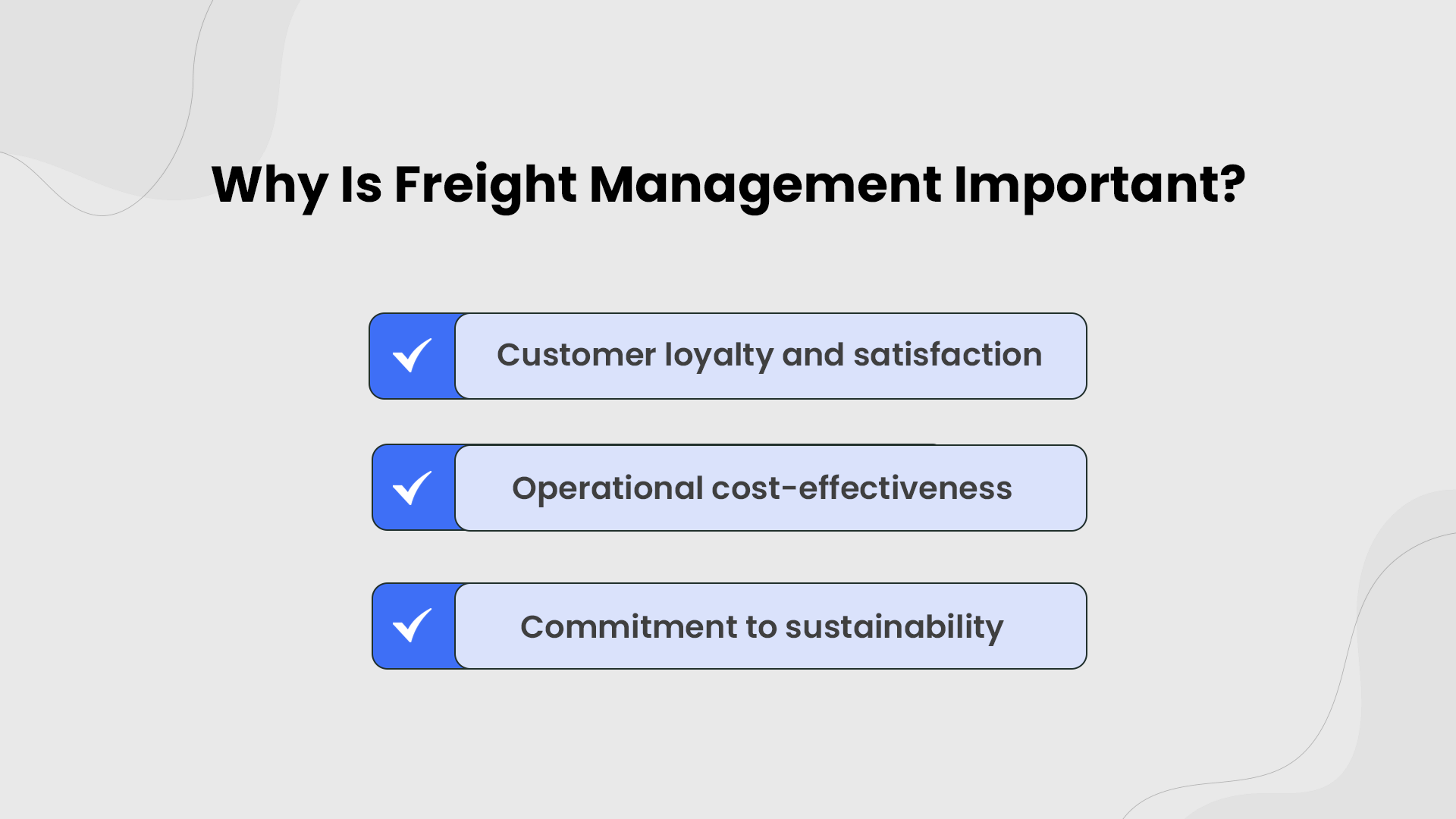
Customer Satisfaction and Loyalty
Timely deliveries and accurate shipment tracking help businesses improve customer satisfaction. When products arrive on time and in good condition, customers are more likely to trust the brand and become repeat buyers.
Using advanced TMS and real-time tracking systems also improves communication and delivery transparency.
A strong freight management system helps businesses lower transportation expenses by optimizing routes, consolidating shipments, and selecting cost-effective carriers.
This helps companies:
Modern transportation management solutions support sustainable logistics by reducing fuel consumption and carbon emissions. Businesses can achieve both operational efficiency and environmental goals through optimised freight planning.
The growing India freight management system market is also encouraging companies to adopt greener and smarter logistics technologies.
Many industries rely on freight management solutions to ensure smooth transportation and supply chain operations.
Manufacturers use freight management to transport raw materials and deliver finished products on time, helping maintain production efficiency.
Retail businesses depend on efficient logistics to keep inventory available and ensure timely product deliveries to stores and customers.
Fast and reliable delivery is critical in e-commerce. A reliable freight company in India can help businesses improve last-mile delivery, shipment tracking, and customer satisfaction.
A modern freight management system also helps businesses manage high shipment volumes and improve delivery speed.
The automotive industry uses TMS and logistics solutions to manage complex supply chains, transport vehicle parts, and ensure timely vehicle deliveries.
The future of freight management will be driven by automation, digital transformation, and smarter logistics technologies.
AI, automation, and advanced TMS platforms will improve route planning, load matching, and logistics decision-making.
Businesses will focus more on reducing emissions using optimised routes, electric vehicles, and eco-friendly transportation practices.
Blockchain technology will improve supply chain transparency, secure transactions, and simplify freight documentation.
Autonomous trucks and drone deliveries are expected to improve transportation speed and reduce operational costs.
IoT devices and 5G connectivity will provide better shipment tracking, vehicle monitoring, and logistics visibility.
Growing online shopping demand will increase the need for faster and more efficient last-mile delivery solutions.
Businesses will focus on building stronger supply chains using diversified carriers, routes, and digital logistics systems.
FreightFox provides advanced freight management solutions designed to simplify transportation operations, improve visibility, and reduce logistics risks. Businesses looking for scalable transportation and freight management platforms can use FreightFox to streamline operations and improve supply chain performance.
Key features include:
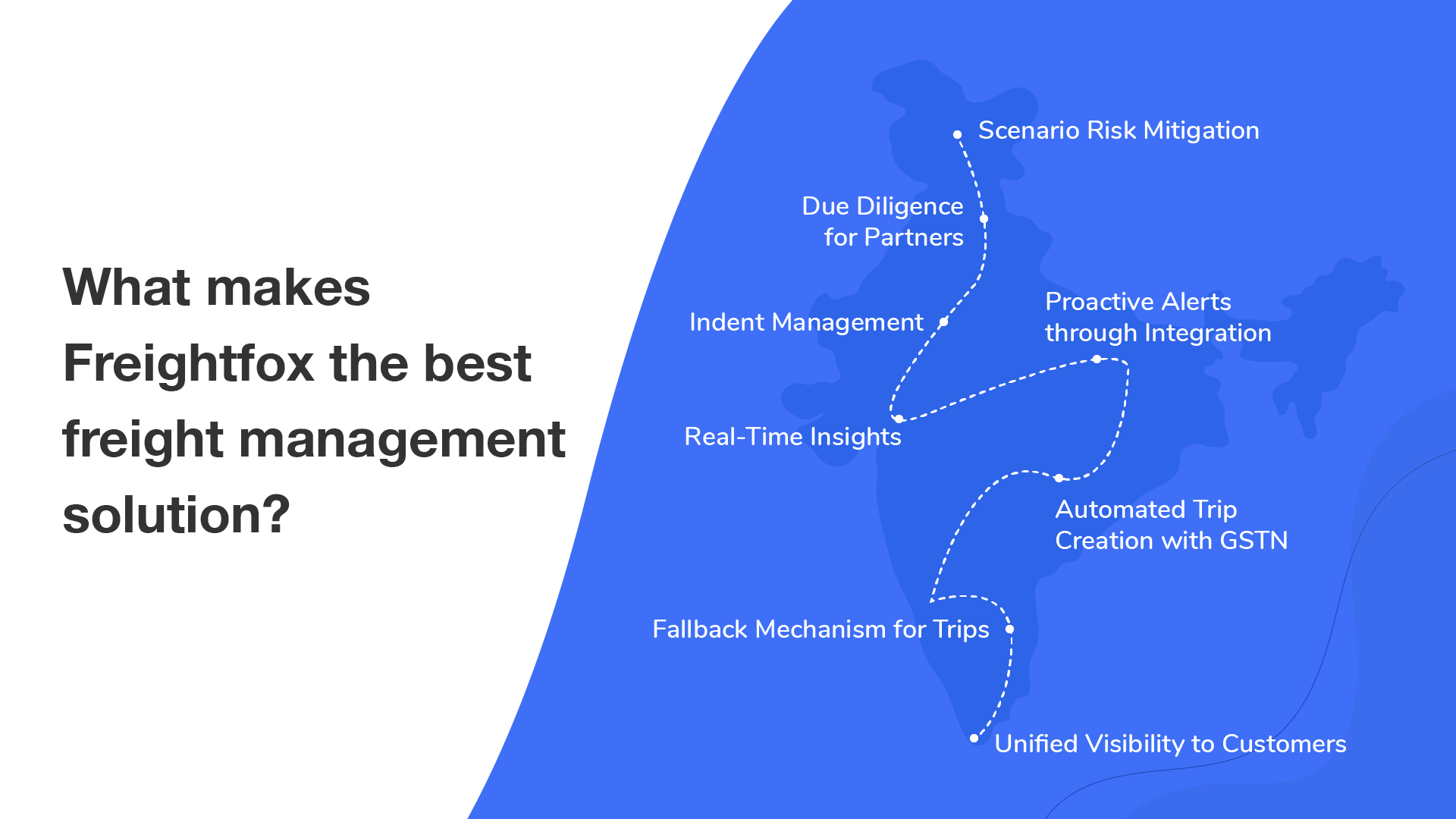
With advanced transportation management solutions and automation tools, FreightFox helps businesses improve efficiency, reduce manual work, and optimise freight operations.
Efficient freight management is no longer optional for modern businesses. From improving customer satisfaction to reducing costs and supporting sustainability, a smart freight management system helps businesses stay competitive in a fast-changing logistics industry.
As logistics becomes more technology-driven, adopting advanced TMS and digital freight management solutions will be essential for long-term supply chain success. Businesses working with trusted logistics providers, including freight management VRL services and other leading freight companies in India, can improve operational efficiency and build stronger supply chains through smarter freight planning and automation.
A freight management system is a digital solution that helps businesses manage transportation, shipment tracking, carrier selection, and logistics operations efficiently. Advanced platforms like FreightFox help companies reduce transportation costs, improve delivery timelines, and gain real-time visibility across the supply chain using smart TMS and automation tools.
FreightFox offers advanced freight management solutions designed to simplify logistics operations and improve supply chain efficiency. With features like real-time shipment tracking, automated trip creation, smart route planning, and GSTN integration, FreightFox helps businesses reduce manual work, improve visibility, and optimise transportation performance.
FreightFox uses modern transportation management solutions and TMS technology to streamline freight operations. The platform helps businesses optimise routes, track shipments in real time, manage carriers efficiently, and reduce delivery delays. This improves operational efficiency, lowers logistics costs, and enhances customer satisfaction.
Yes, FreightFox helps businesses proactively manage logistics risks through real-time alerts, scenario analysis, and shipment visibility tools. Its advanced freight management system helps reduce disruptions caused by delays, route issues, and carrier inefficiencies, ensuring smoother and more reliable supply chain operations.
Freight management today calls for modern strategies and the right technologies to keep pace with a fast-moving logistics industry. Companies can use a digital maturity framework to benchmark their progress and ensure these innovative technologies are integrated effectively. As businesses navigate new challenges and opportunities in 2025, efficient freight management is crucial for cost control, timely deliveries, and supply chain resilience.
At its core, freight management is the end-to-end coordination of goods movement, ensuring shipments reach their destinations on time and within budget. It involves working with carriers, distributors, vendors, and shippers to plan, transport, store, and track freight.
The global Transportation Management System (TMS) market is projected to reach $44.96 billion by 2030, reflecting the growing demand for smarter logistics solutions. Businesses must optimise freight operations to remain competitive, reduce disruptions, and improve efficiency.
In this guide, we’ll explore how freight management enhances manufacturing logistics, from smarter transportation choices to cost-effective, precision-driven operations.
Let’s dive in!
Freight management is the process of moving goods efficiently, affordably, and on time. It involves planning shipments, carrying them out smoothly, and making continuous improvements to avoid delays and extra costs.
A good freight system includes choosing the right carriers, planning the best routes, tracking shipments, and keeping costs under control. With technology and data, businesses can make their supply chains faster and more reliable.
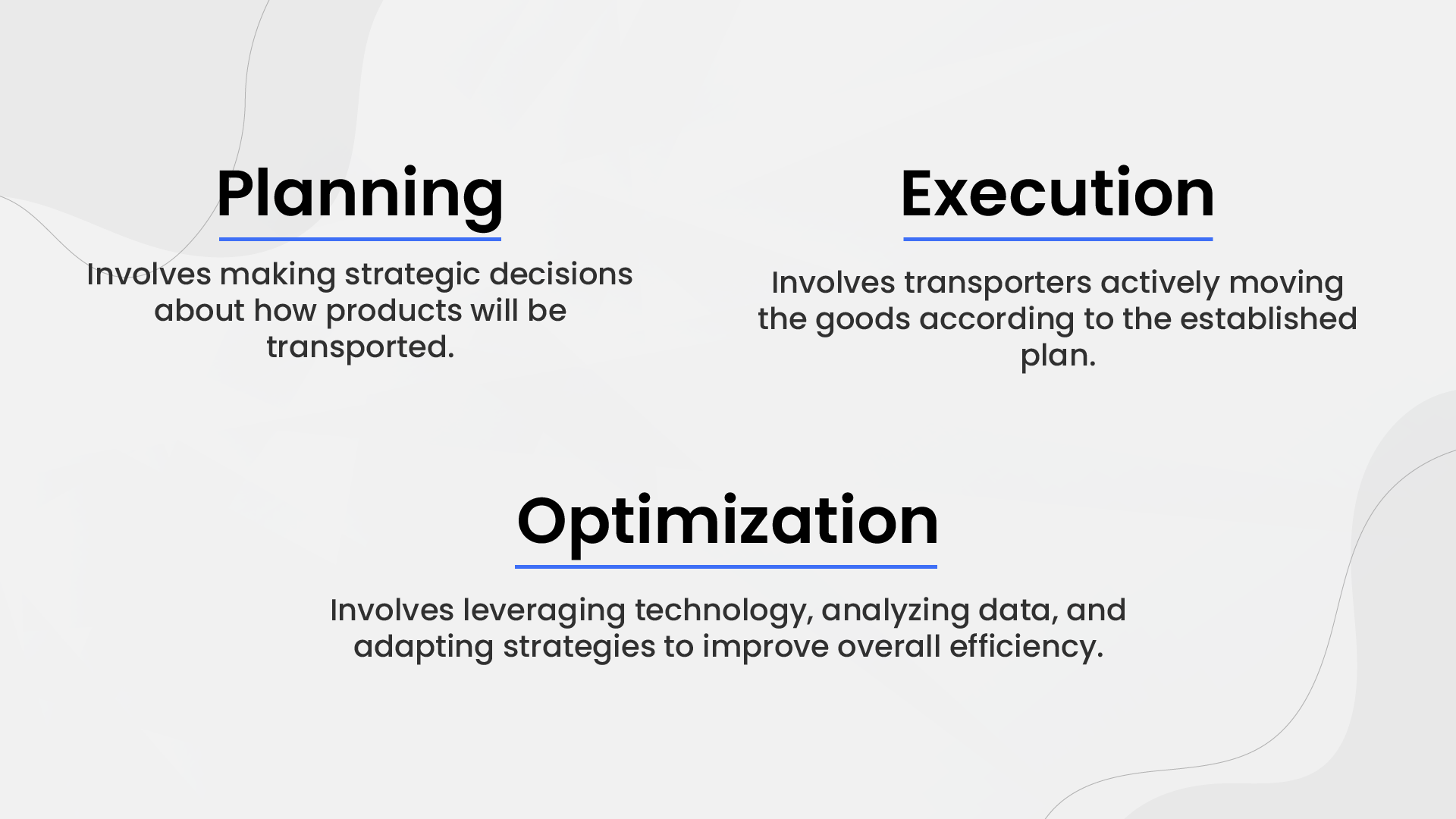
This process involves planning, executing, and optimising the transportation of goods to ensure efficiency and cost-effectiveness:
The planning phase of freight management involves making strategic decisions about how products will be transported.
For manufacturers, this means:
It’s about creating a roadmap that sets the foundation for a smooth journey from production to delivery.
Once the plan is in place, the execution phase kicks in. This is where transporters actively move the goods according to the established plan.
Key aspects of execution include:
Manufacturers rely on this phase to ensure that their products move swiftly and safely through the supply chain.
Freight management is a continuous process of optimisation. It’s about finding ways to improve efficiency, reduce costs, and enhance overall performance.
This involves:
Manufacturers benefit from this phase by streamlining operations and ensuring that resources are utilised effectively.
To further enhance freight planning and execution, explore our guide on Transportation Management Systems to see how digital tools streamline logistics.
Freight management is a collaborative effort that involves multiple stakeholders, all with their own unique roles and responsibilities. Here’s a quick look at who these stakeholders are:

These are the businesses or individuals initiating the transportation process. Shippers include manufacturers, wholesalers, and retailers responsible for ensuring goods are ready for transport and meet the necessary packaging and documentation requirements.
Carriers physically transport goods using various modes such as trucks, ships, trains, or airplanes. They ensure timely delivery and maintain the safety and condition of the cargo during transit.
Acting as intermediaries, freight forwarders manage the logistics of shipping on behalf of shippers. They handle tasks such as route planning, documentation, customs clearance, and coordinating with multiple carriers.
These companies offer supplementary services like warehousing, inventory management, and last-mile delivery. Their role is to support and streamline supply chain operations for shippers and consignees.
For international shipments, customs brokers are essential. They ensure compliance with import/export regulations, manage customs documentation, and facilitate smooth border crossings.
Consignees are the recipients of the goods. They rely on accurate tracking information and timely delivery to meet their operational or personal needs.
Regulatory bodies oversee the compliance of freight operations with local and international laws. They enforce standards related to safety, trade agreements, and environmental regulations.
These stakeholders offer digital tools and platforms for freight management. Solutions may include tracking systems, route optimization software, or freight analytics platforms to improve decision-making and efficiency.
Insurance companies provide coverage to mitigate risks associated with freight damage, loss, or delays. They play a vital role in protecting the interests of shippers and consignees.
Effective freight management requires collaboration across stakeholders. Learn how Supply Chain Visibility ensures transparency across the entire network.
Now that we've scratched the surface of what freight management entails, here's a closer look at the gears that make up a comprehensive freight management system.
It's not just about getting a product from point A to point B; it's about orchestrating a blend of elements to ensure efficiency, cost-effectiveness, and compliance with regulations. In freight management, meticulous attention to these details is what separates smooth operations from logistical chaos.
Let's break down the key components that make up a well-oiled freight management machine.
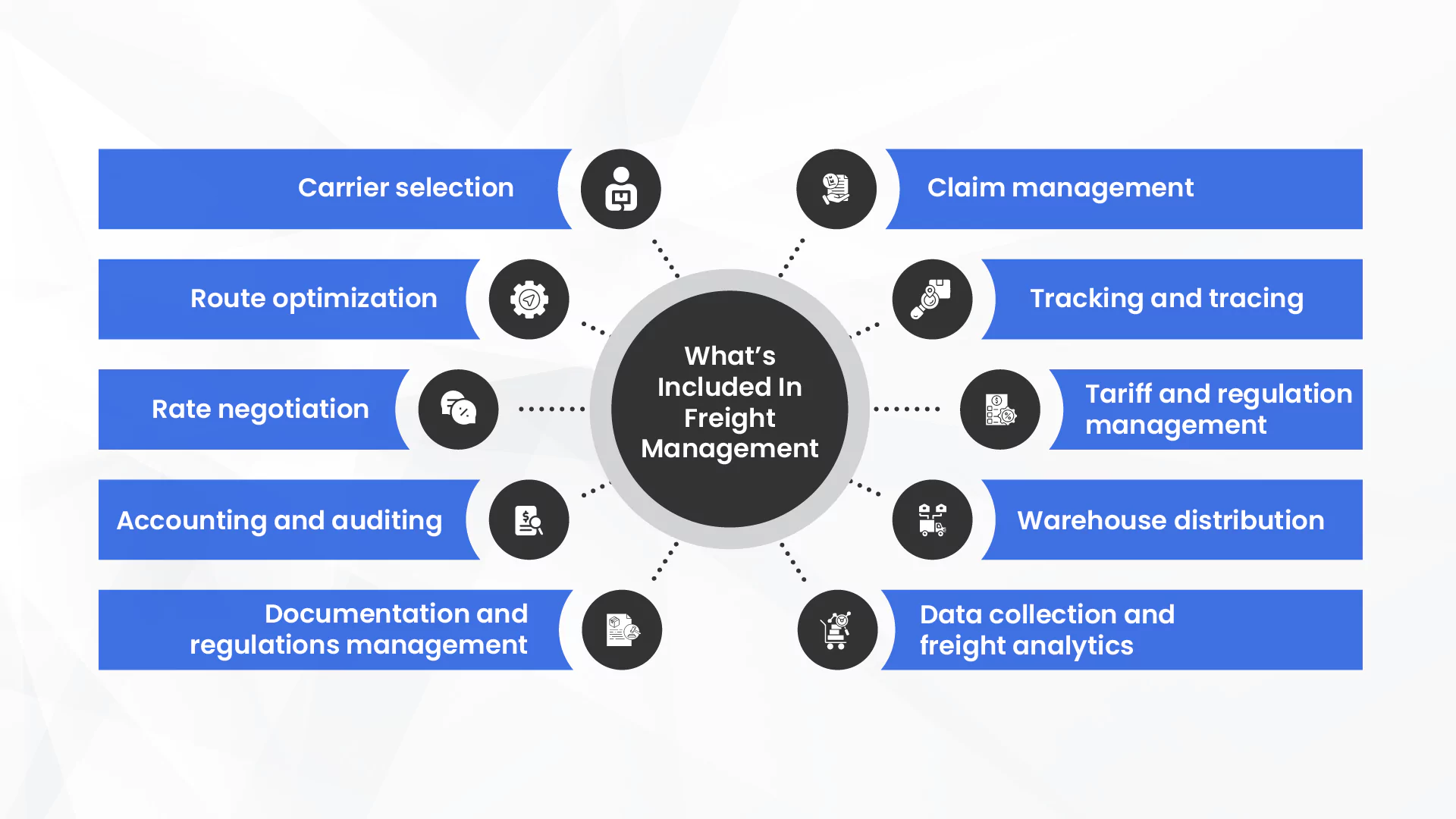
Choosing the right carrier is akin to choosing the right team player for your team. Here are some of the things to keep in mind while choosing a carrier.
An efficient route is the best way to balance costs and delivery times. Here’s how you can strike that balance.
Reducing lead time is essential for maintaining efficiency. Check out our guide on Lead Time Reduction to learn how to speed up deliveries.
Skill full negotiations are a must to ensure both parties get a fair deal. Here are some tips.
Use these tips to ensure you stay on top of your finances, ensuring stable operations.
One of the most important factors in freight management is being aware of compliance laws and adhering to them.
Freight is liable to be damaged or lost irrespective of our best efforts. Here are some of the types of claims you need to be aware of.
Knowing your freight’s location is an important element in freight management, and here are the ways you can track your freight.
International freight often has unique tariffs and regulations. Here are tips to deal with them.
Another important cog in the freight management system wheel is warehouse management. Here are some handy tips.
Optimising freight distribution ensures timely deliveries. Read more about Freight Distribution Management and best practices for logistics.
As with any industry, data-driven decisions will always help you stay on top of freight management. Here are some data sources you ought to pay attention to.
Load planning is an integral part of improving both fuel efficiency and delivery timelines. Here are some important factors to consider.
The use of technology to streamline freight operations comes with many benefits. Let’s dive into the advantages of leveraging freight management systems:
Freight management systems provide real-time tracking of shipments, offering end-to-end visibility across the supply chain. This transparency helps businesses monitor delivery progress, anticipate delays, and communicate accurate updates to stakeholders.
By automating processes like route planning, carrier selection, and rate comparison, FMS helps reduce transportation costs. The system identifies the most cost-effective shipping options and minimises fuel consumption through optimised routes.
Cost control and efficiency are key in freight operations. Our insights on Freight Audit explain how auditing helps reduce errors and optimise spending.
Advanced analytics and reporting tools in an FMS provide actionable insights into freight operations. Businesses can use these insights to identify inefficiencies, forecast demand, and make data-driven decisions for continuous improvement.
FMS automates manual processes such as documentation, invoicing, and compliance checks, reducing errors and saving time. This allows logistics teams to focus on strategic tasks rather than administrative work.
The system simplifies adherence to regulations by automating the documentation required for customs clearance and other legal processes. This reduces the risk of non-compliance, penalties, and shipment delays.
Stay up-to-date on compliance issues by reading our blog on Supply Chain Resilience and how it can mitigate risks.
Freight management systems can adapt to changing business needs, whether it’s scaling operations during peak seasons or accommodating new shipping routes and carriers. This flexibility ensures businesses remain agile in dynamic markets.
With faster delivery times, accurate tracking information, and proactive communication, businesses can enhance the customer experience. Reliable freight management also builds trust and loyalty with clients.
By optimising routes and reducing fuel consumption, FMS contributes to lowering the environmental impact of freight operations. Businesses can align with sustainability goals while cutting operational costs.
An FMS identifies potential disruptions in the supply chain, enabling businesses to address issues proactively. Whether it’s rerouting shipments or resolving carrier disputes, the system helps maintain continuity.
While freight management is designed to streamline the transportation of goods, it's not without its hurdles. The complexities of the supply chain bring its own set of challenges.
Let's uncover some common obstacles that organisations often face.
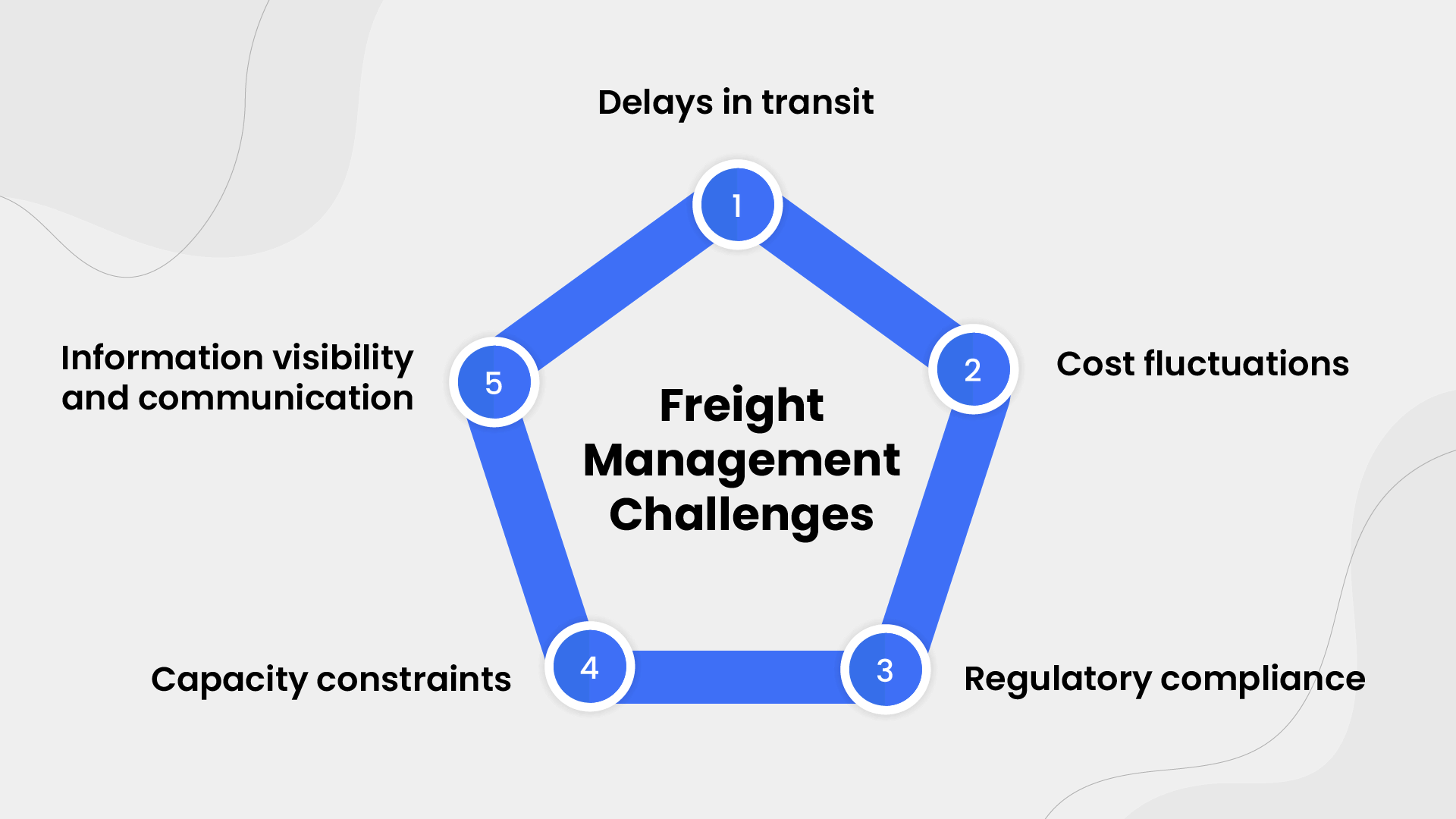
One of the most prevalent challenges is delays in transit. Whether due to traffic, unforeseen weather events, or inefficiencies in the transportation process, delays can disrupt carefully planned schedules.
These interruptions can lead to increased holding costs, unhappy customers, and disruptions in the overall supply chain.
Managing freight costs is a delicate balancing act. Fluctuations in fuel prices, carrier rates, and other unexpected expenses can throw budgets off course.
Organisations often find it challenging to predict and control these cost variations, impacting their bottom line and overall profitability.
The maze of regulations, tariffs, and compliance standards poses a significant challenge. Freight managers need to keep up with shifting international and domestic regulations to ensure that shipments meet legal requirements. Failure to comply can result in fines, delays, and damaged business relationships.
The availability of transportation resources, including trucks and carriers, is not always guaranteed. During peak seasons or unexpected demand spikes, organisations may struggle to secure the necessary capacity. This can lead to increased costs, delayed deliveries, and a strain on the entire supply chain.
Effective communication and real-time visibility into the status of shipments are critical for successful freight management. However, many organisations struggle to keep communication clear and consistent between various stakeholders in the supply chain.
Lack of information visibility can lead to misunderstandings, increased response times, and a lack of agility in addressing issues as they arise.
Efficient freight management is crucial for a company’s success, directly impacting its bottom line in several key ways:
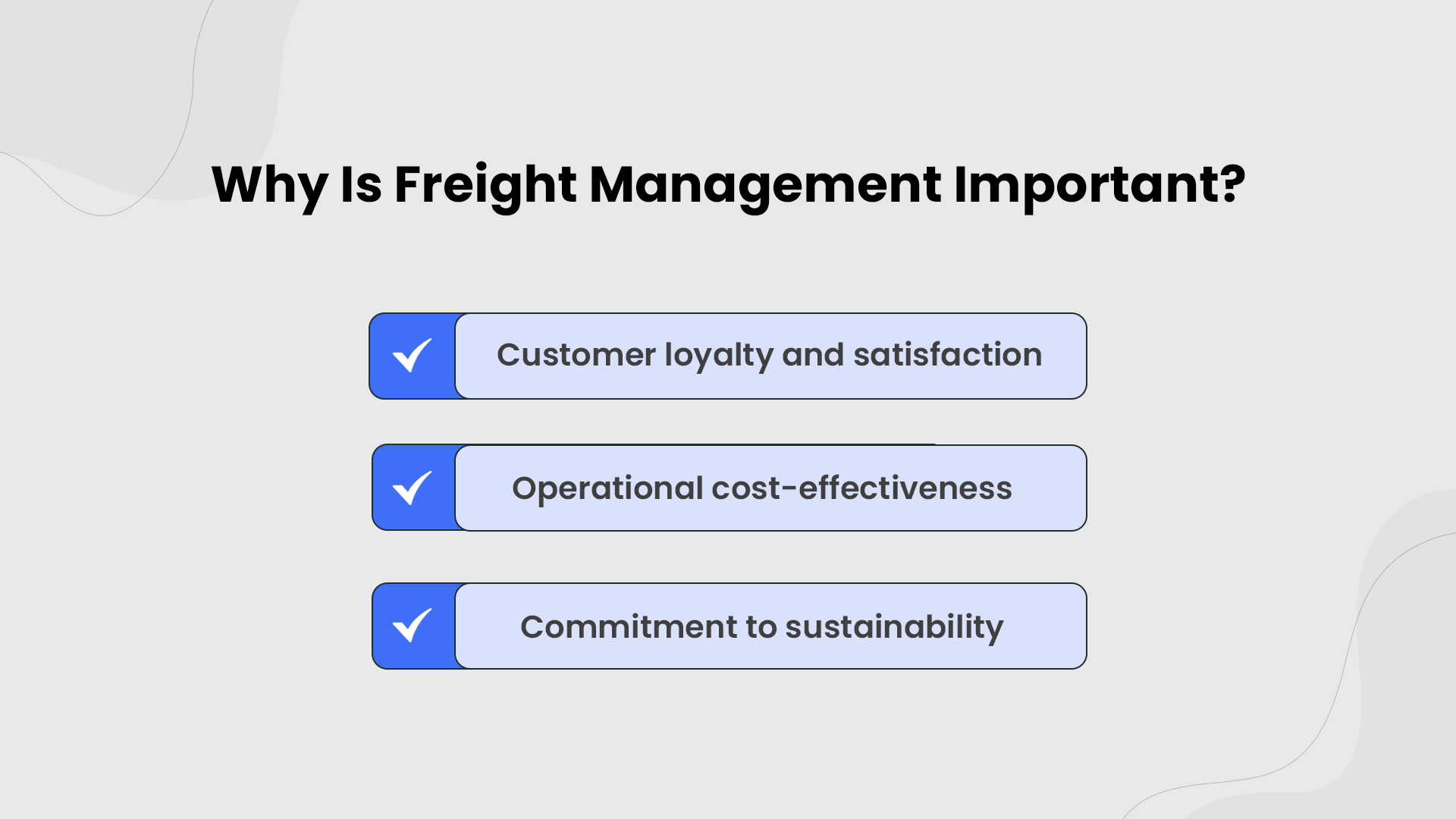
Timely deliveries are the cornerstone of effective freight management. When products arrive on time and in excellent condition, adopting efficient freight management fulfils corporate responsibility and appeals to environmentally aware consumers.This fosters trust and long-term relationships.
Beyond customer satisfaction, freight management plays a significant role in reducing operational costs. By optimiding transportation routes, consolidating loads, and negotiating better rates, businesses can lower expenses and improve their financial performance.
Freight management also contributes to environmental goals. A streamlined system reduces unnecessary fuel consumption and lowers carbon emissions, making logistics more sustainable. As businesses become more eco-conscious, adopting efficient freight management not only fulfils corporate responsibility but also appeals to environmentally aware consumers.
In summary, efficient freight management is a vital component of a business’s logistics strategy. It drives customer loyalty, reduces costs, and supports a sustainable future.
Freight management isn’t a one-size-fits-all solution; it’s a vital tool for a range of industries. Here’s how it benefits different sectors:
In manufacturing, where precision and timing are essential, freight management ensures raw materials arrive on schedule and finished products reach distributors and retailers promptly. This efficient flow keeps production on track and delivery timelines intact.
The retail industry relies heavily on freight management to maintain inventory levels and meet customer demand. It ensures that products are delivered to stores or directly to customers without delays, keeping shelves stocked and customers satisfied.
For e-commerce businesses, fast and reliable deliveries are crucial. Freight management helps move parcels from warehouses to customers’ doorsteps, ensuring timely shipments and enhancing the customer experience.
In the automotive industry, where the supply chain is complex, freight management is essential. From sourcing parts globally to delivering finished vehicles to dealerships, efficient freight management ensures the right parts arrive on time for production, and vehicles reach dealerships without delay.
Across all industries, freight management streamlines operations, reduces costs, and maintains a reliable supply chain. For manufacturers, in particular, it plays a critical role in ensuring efficiency and precision.
As we look ahead to 2025, several emerging technologies and trends are set to shape the future of freight management:

FreightFox is a cutting-edge solution designed to transform how businesses manage transportation logistics.
In freight management, where precision, reliability, and adaptability are essential, FreightFox offers a comprehensive solution that tackles the diverse challenges of modern logistics with ease.
Let’s explore the key features that make FreightFox the top choice for efficient freight management.
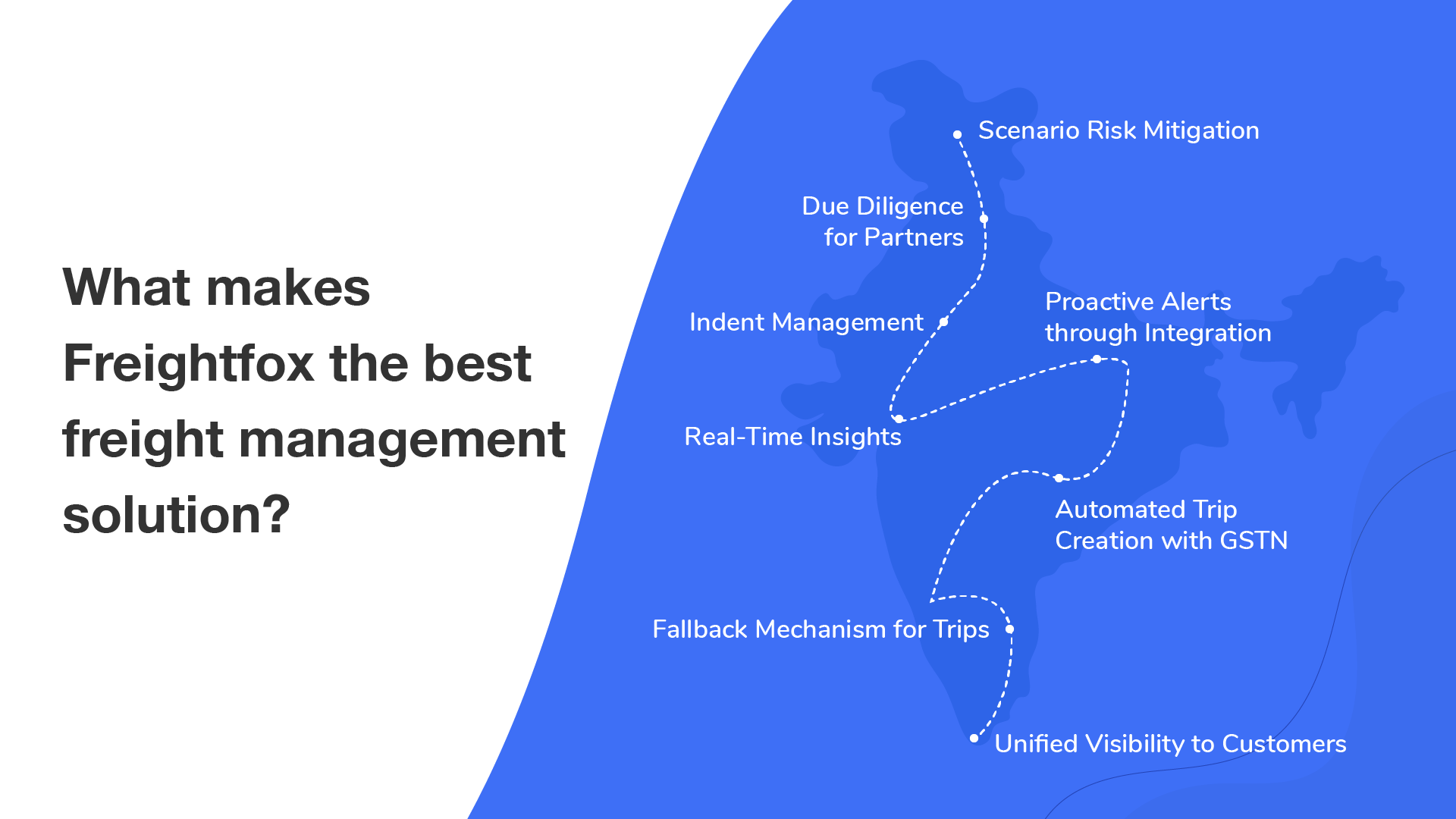
FreightFox takes risk mitigation to the next level with advanced scenario analysis capabilities. By evaluating potential risks in various scenarios, we help businesses proactively identify and address issues before they disrupt operations. This foresight ensures a smooth, resilient supply chain.
We recognise the crucial role transport partners play in logistics. Our thorough onboarding process ensures that every partner on our platform undergoes extensive vetting. This reduces risks and guarantees reliability, giving manufacturers peace of mind.
Efficient freight management depends on seamless operations. FreightFox’s sophisticated indent management system streamlines order processing, ensuring that products flow smoothly through the supply chain with precision and accuracy.
FreightFox integrates with Vahan and ULIP data, providing businesses with real-time insights into their transportation operations. From vehicle tracking to compliance verification, this integration ensures a smooth, error-free transportation process.
With FreightFox, you can spot potential issues early through proactive alerts. By integrating with both internal and external systems, we provide timely notifications and updates, allowing businesses to make informed decisions based on real-time data.
FreightFox enhances efficiency with GSTN integration, allowing for automatic trip creation without manual input. Even without SAP or ERP systems, we ensure smooth, automated trip management that saves time and minimises errors.
Our fallback mechanism ensures continuous vehicle tracking through multiple channels, including GPS, SIM, the FreightFox app, and FASTag. This flexible trip management system supports both outbound and inbound materials, offering a reliable solution for diverse logistical needs.
Visibility is critical in logistics. FreightFox provides unified visibility for both full truckload and part truckload trips, whether inbound or outbound. This integrated approach ensures you have a clear, comprehensive view of your logistics operations for smarter decision-making.
The spotlight is on efficient freight management. Timely deliveries fuel customer loyalty, cost-effective operations improve the bottom line, and sustainability becomes a defining trait.
Today's business realm demands more than traditional approaches. It calls for innovative solutions like FreightFox.
As we navigate this dynamic landscape, investing in state-of-the-art solutions is not a choice – it's a competitive necessity.
Want to learn more about how you can use FreightFox to let logistics become the driving force behind your triumph? Get in touch with us today!
It improves efficiency, reliability, transparency, reduces costs and delays, and strengthens stakeholder relationships.
Distance/route, transport mode, shipment size, fuel costs, demand, special handling, and regulatory fees.
Small businesses often outsource to 3PLs for cost-effectiveness, while large enterprises have in-house teams and comprehensive systems.
Freight management is the overarching process, while transportation management focuses on the physical movement.
FreightFox is a full-stack TMS and Control Tower platform that helps enterprises streamline freight procurement, execution, visibility, settlement, and sustainability—from Procure-to-Pay