
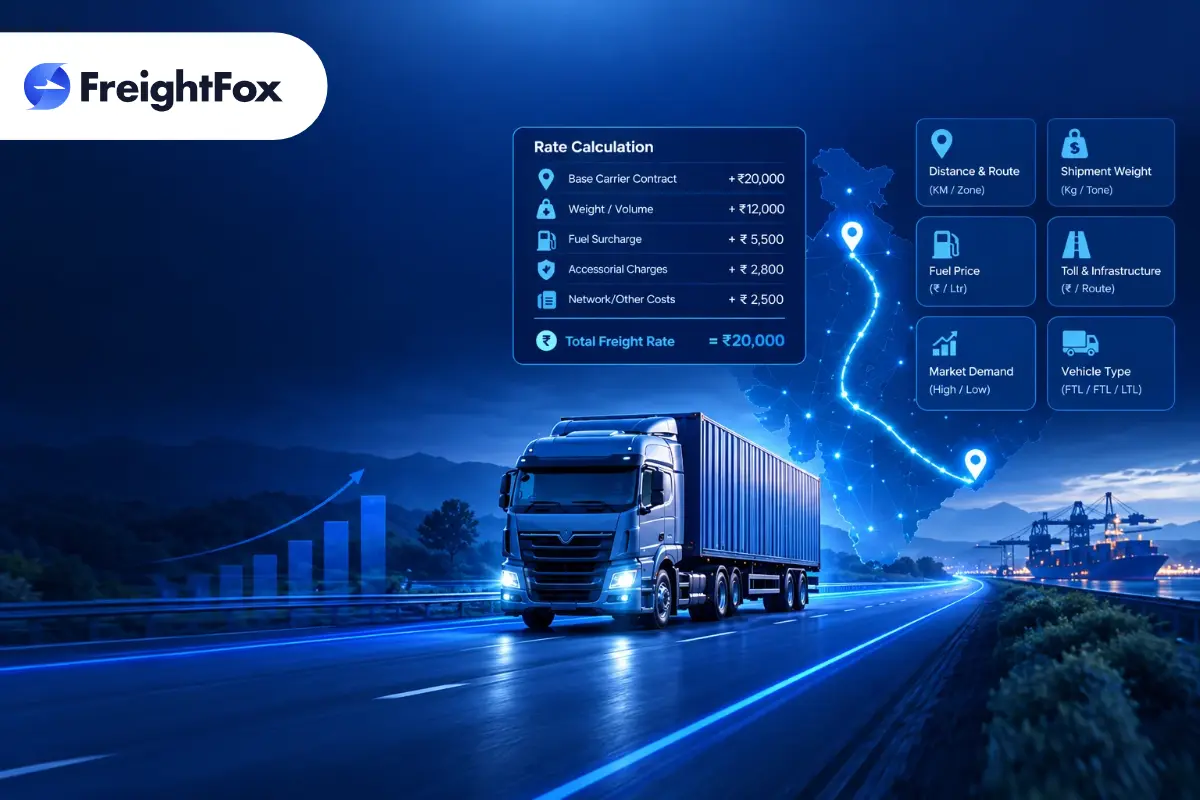
Shipping goods from one point to another isn't just about hiring a truck and paying a flat fee. Behind every invoice is a calculation that factors in distance, weight, fuel, market demand, and a dozen other variables. If you've ever looked at two freight quotes for what seems like the same shipment and wondered why the numbers are so different, you're not alone. Understanding how freight rates are calculated can help businesses plan budgets more accurately, negotiate better deals, and avoid overpaying for transportation.
In this blog, we'll break down what freight rates actually are, the method behind freight rate calculation, and how businesses can benchmark and manage these costs more effectively.
A freight rate is the price charged by a carrier to transport goods from an origin to a destination. It covers the cost of moving the shipment and typically accounts for the mode of transport (road, rail, air, or sea), the type of goods, the distance covered, and the service level required.
Freight rates aren't fixed numbers pulled out of thin air; they're built from a mix of fixed and variable costs that carriers incur while providing the service. This is why freight cost can vary significantly between two shipments that look similar on paper but differ in weight, route, or timing.
At a basic level, freight rate calculation involves multiplying the shipment's weight or volume by a per-unit rate, then adjusting for additional charges. The general approach looks like this:
For example, suppose a business needs to ship a 10-ton load over a distance of 500 km using a standard truck:
Freight cost calculation depends on several moving parts. Here are the key factors that influence pricing:
Businesses that actively track these factors are in a better position to plan shipments and negotiate rates, which is a core part of effective freight procurement.
It's worth distinguishing between freight rate and truck operating cost, since the two are often confused.
In a healthy freight market, rates stay above operating costs, allowing carriers to remain profitable. However, in periods of oversupply or low demand, rates can dip close to (or even below) operating costs, squeezing carrier margins. Understanding this relationship helps shippers recognize when rates are unsustainably low or fairly priced.
Fuel is typically one of the largest components of a truck's operating cost, often accounting for a significant share of total expenses. Because of this, even small changes in diesel prices can have a noticeable ripple effect on freight rates.
When diesel prices rise, carriers usually pass on the increased cost through fuel surcharges, which are added on top of the base freight rate. Conversely, when diesel prices fall, rates may soften though not always immediately, since contracts and market lag can delay adjustments.
For businesses shipping regularly, keeping an eye on diesel price trends is a practical way to anticipate changes in transportation costs and time shipments or contract renewals accordingly.
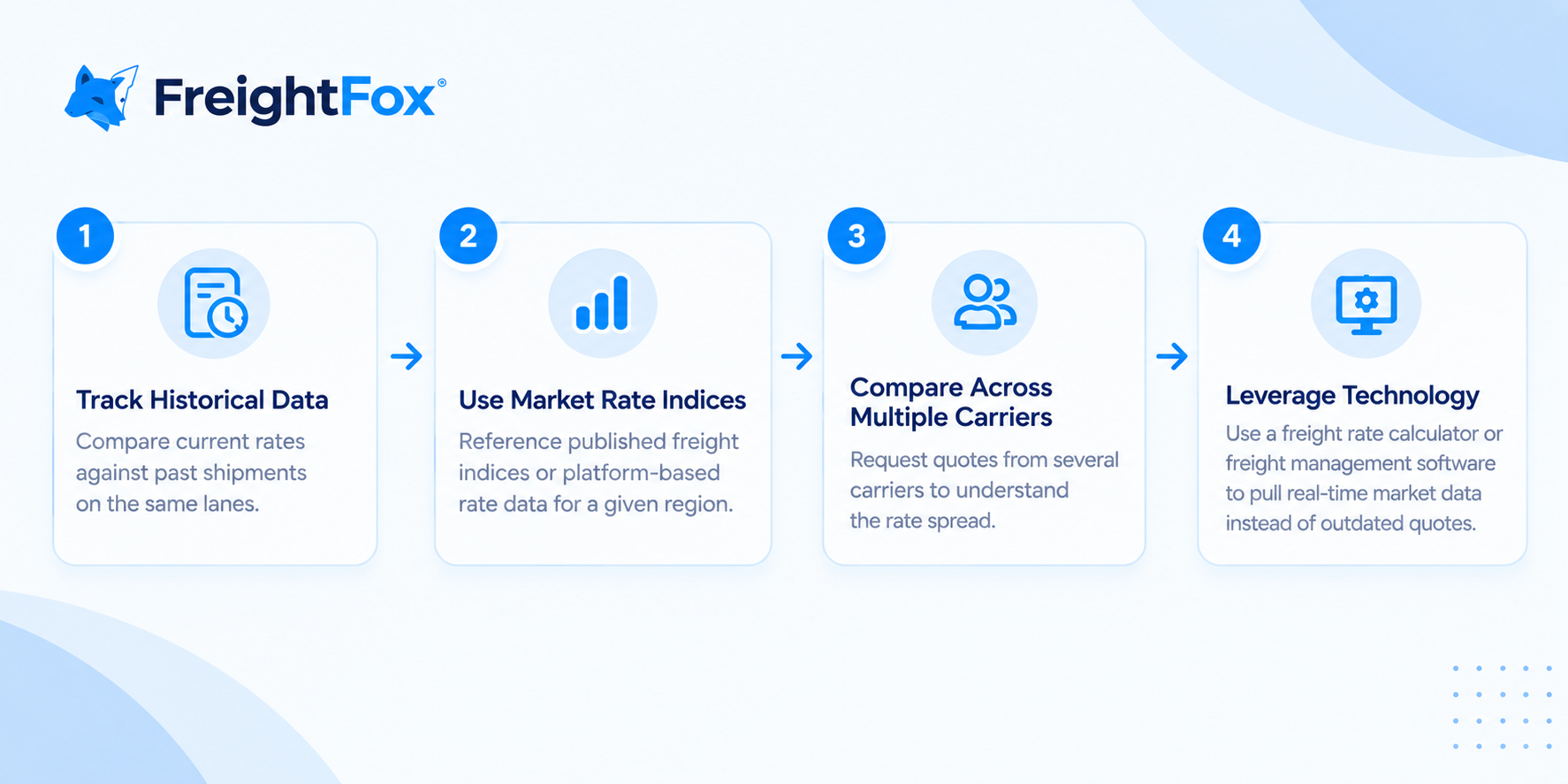
Benchmarking freight rates means comparing your current shipping costs against market averages for similar routes, shipment types, and volumes. This helps businesses identify whether they're overpaying, getting a fair deal, or have room to negotiate.
Here's how businesses typically approach benchmarking:
Regular benchmarking is especially valuable for businesses with recurring shipments, as it turns freight cost management into an ongoing, data-driven process rather than a one-time negotiation.
Manually calculating freight rates accounting for distance, fuel, vehicle type, and market fluctuations is time-consuming and prone to error. A Freight Rate Calculator simplifies this by instantly generating an estimate based on real-time inputs.
Key benefits include:
For businesses managing multiple shipments or lanes, a calculator becomes an essential tool for consistent freight cost calculation.
Using a freight rate calculator typically involves a few simple steps:
Most modern calculators pull live data, which means the estimate reflects current market conditions rather than static, outdated pricing.
FreightFox helps businesses move beyond manual, spreadsheet-based freight cost calculation by offering data-backed tools that simplify rate discovery and benchmarking. Instead of relying on scattered carrier quotes, businesses get access to real-time market rates, historical trends, and lane-specific insights all in one place.
This makes it easier to plan shipments, negotiate confidently with carriers, and ensure freight procurement decisions are backed by data rather than guesswork. For businesses looking to streamline their transportation costs further, pairing rate calculation with dedicated freight management software can bring more visibility and control across the entire shipping process.
Want to know your shipment's estimated cost before you book? Try FreightFox's Freight Rate Calculator and get a data-backed rate estimate in seconds.
Freight rates aren't arbitrary; they're the result of a calculation that weighs distance, weight, fuel prices, demand, and a range of accessory costs. Understanding how freight rates are calculated gives businesses the clarity needed to plan shipments, control transportation costs, and negotiate more effectively with carriers. Tools like a Freight Rate Calculator make this process faster and more accurate, turning what used to be guesswork into a data-driven decision.
FreightFox is a full-stack TMS and Control Tower platform that helps enterprises streamline freight procurement, execution, visibility, settlement, and sustainability—from Procure-to-Pay