
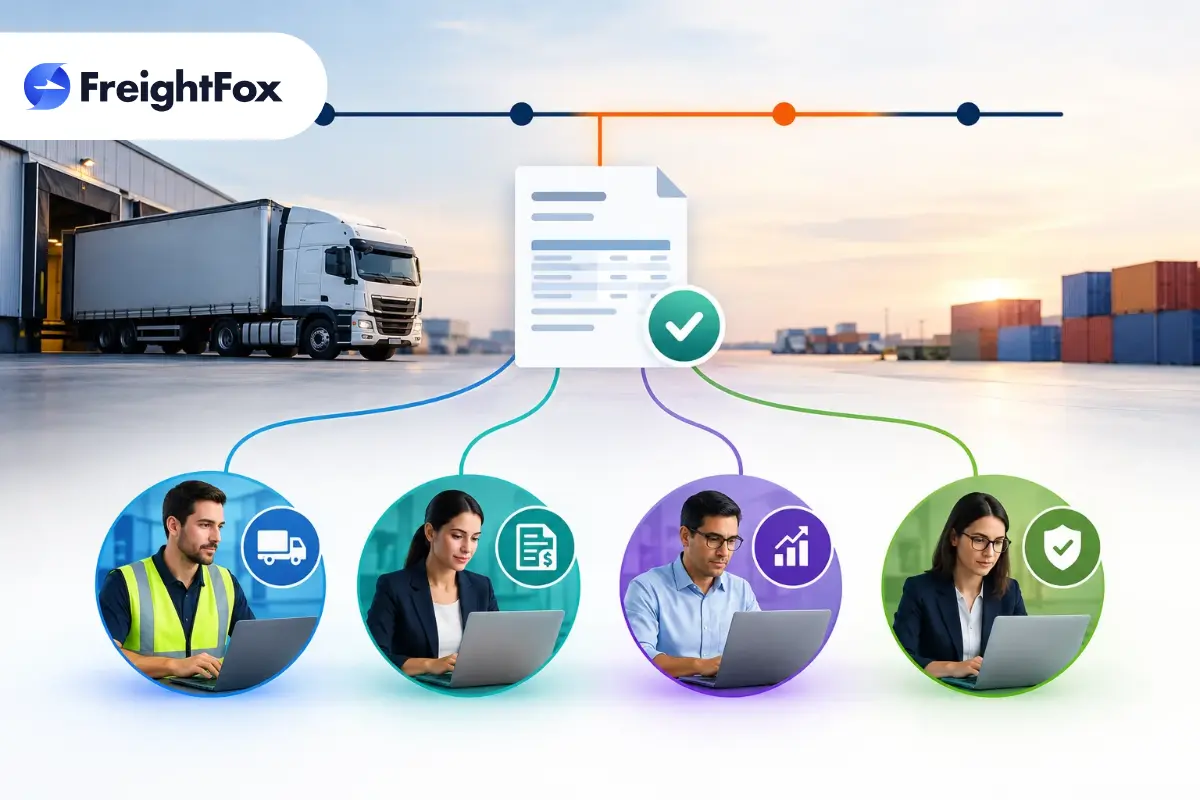
Ask four people on your team why one freight invoice is stuck in dispute, and you'll get four different, completely accurate answers, and none of them will agree on what actually happened.
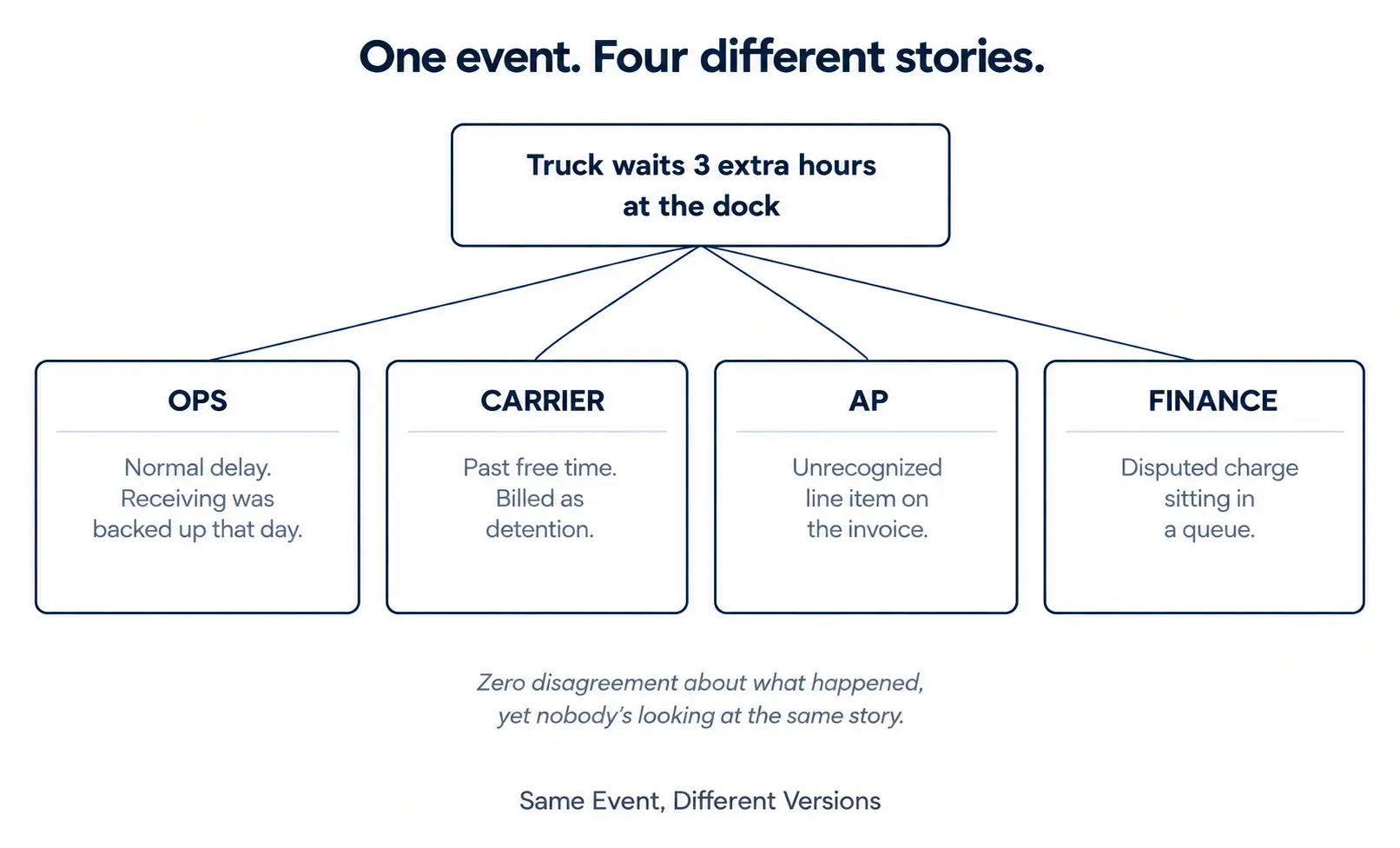
Ops says the truck sat at the dock three extra hours because receiving was backed up. A normal day. The carrier's billing system logs the same three hours as detention, past free time, chargeable. AP sees a line item with no context for why it's there. Finance sees a disputed charge sitting in a queue, waiting for someone to dig in.
Nobody got the facts wrong. The problem is that none of them are working off the same definition, so the invoice sits until a human manually reconciles four versions of one event, invoice after invoice, week after week.
That's the real bottleneck in freight invoice audit and payment. Not processing speed. Agreement. And it's the reason automation alone won't fix your dispute backlog, or speed up the freight payment that's stuck behind it. It'll just help you reach the wrong answer faster.
Here's where that disagreement actually lives, and what it takes to close it.
Ask most AP teams what's broken in freight invoice audit and they'll point to the grind: open the TMS, pull the invoice, dig out the contract PDF, message ops to make sense of one line item. Repeat fifty times a week.
That description isn't wrong. It's just describing the effect, not the cause.
The actual cause: every system your freight invoice touches was built by a different team, for a different job, and none of those jobs required agreeing with each other.
None of these systems are wrong for what they were built to do. But nobody built a layer above all four that says this charge, this status, this rate: here's what it actually means, everywhere.
So your AP team does that translation by hand, invoice by invoice. That's why freight invoice reconciliation still runs at the speed of a person cross-checking four systems, instead of the speed of your software.
Most freight tech stacks already have Level 1: your invoice links to the shipment, the carrier, and the purchase order. That's wiring, not agreement.
What's missing for almost every freight team is Level 2, the shared definition layer, where "detention" means the same thing no matter which carrier's word for it shows up on the invoice, and "approved" means the same status whether ops, AP, or finance is the one saying it.
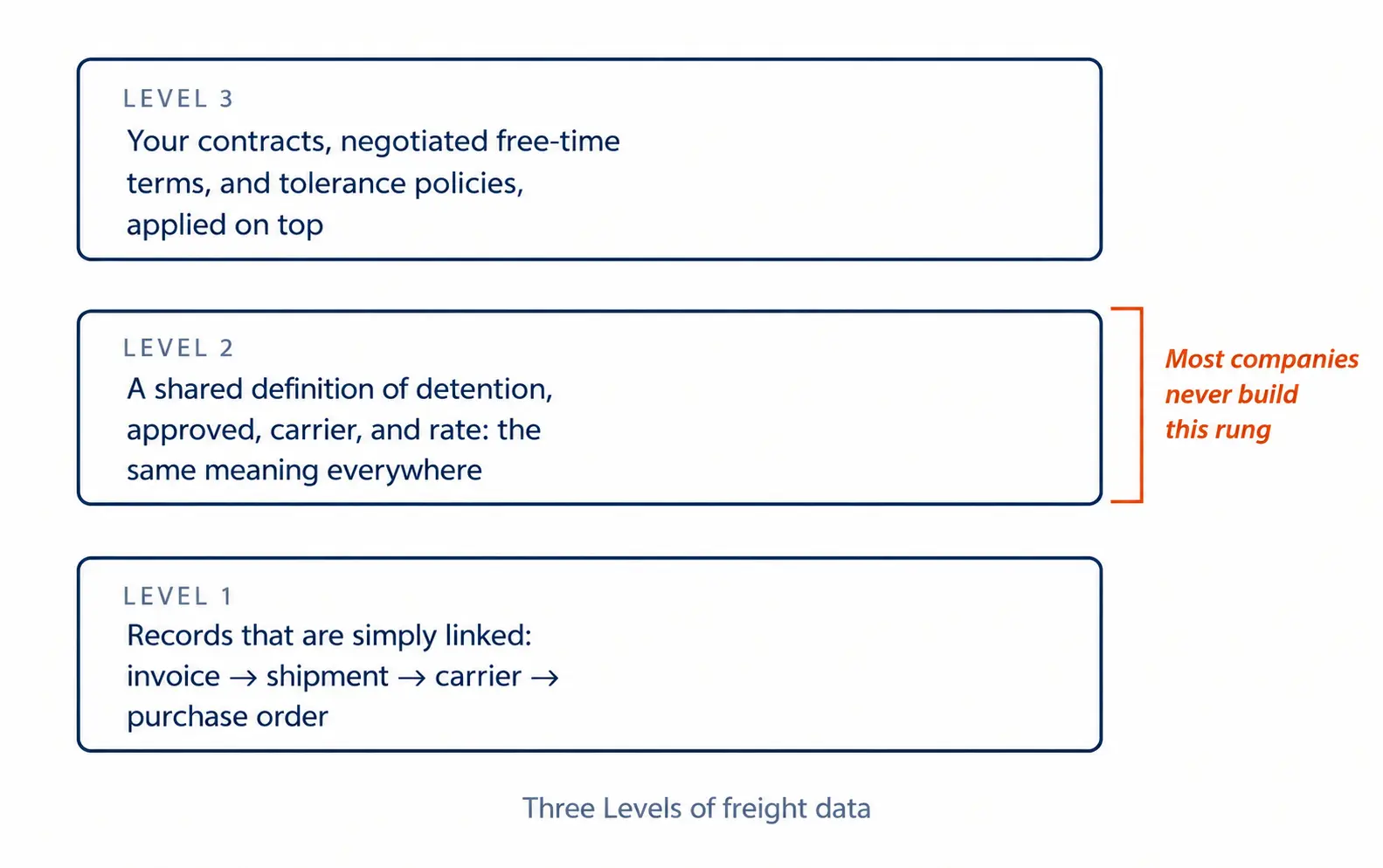
Level 3, your specific contract terms and tolerance rules, only works once Level 2 is solid underneath it. Skip straight to Level 3 and you get confident-sounding wrong answers, faster than before.
Every freight invoice you dispute or clear runs into the same four gaps, whether you've named them internally or not.
Every system in your freight stack has its own way of naming the same carrier, and none of them are built to check against each other automatically. That gap is where subcontracted loads slip through unflagged, where a carrier you never approved ends up running your freight, and where billing discrepancies get written off as "probably fine" because nobody has the bandwidth to trace one invoice back through four separate identity records. Freight invoice matching that stops at the invoice level, without reaching back to the tender, is matching the wrong thing.
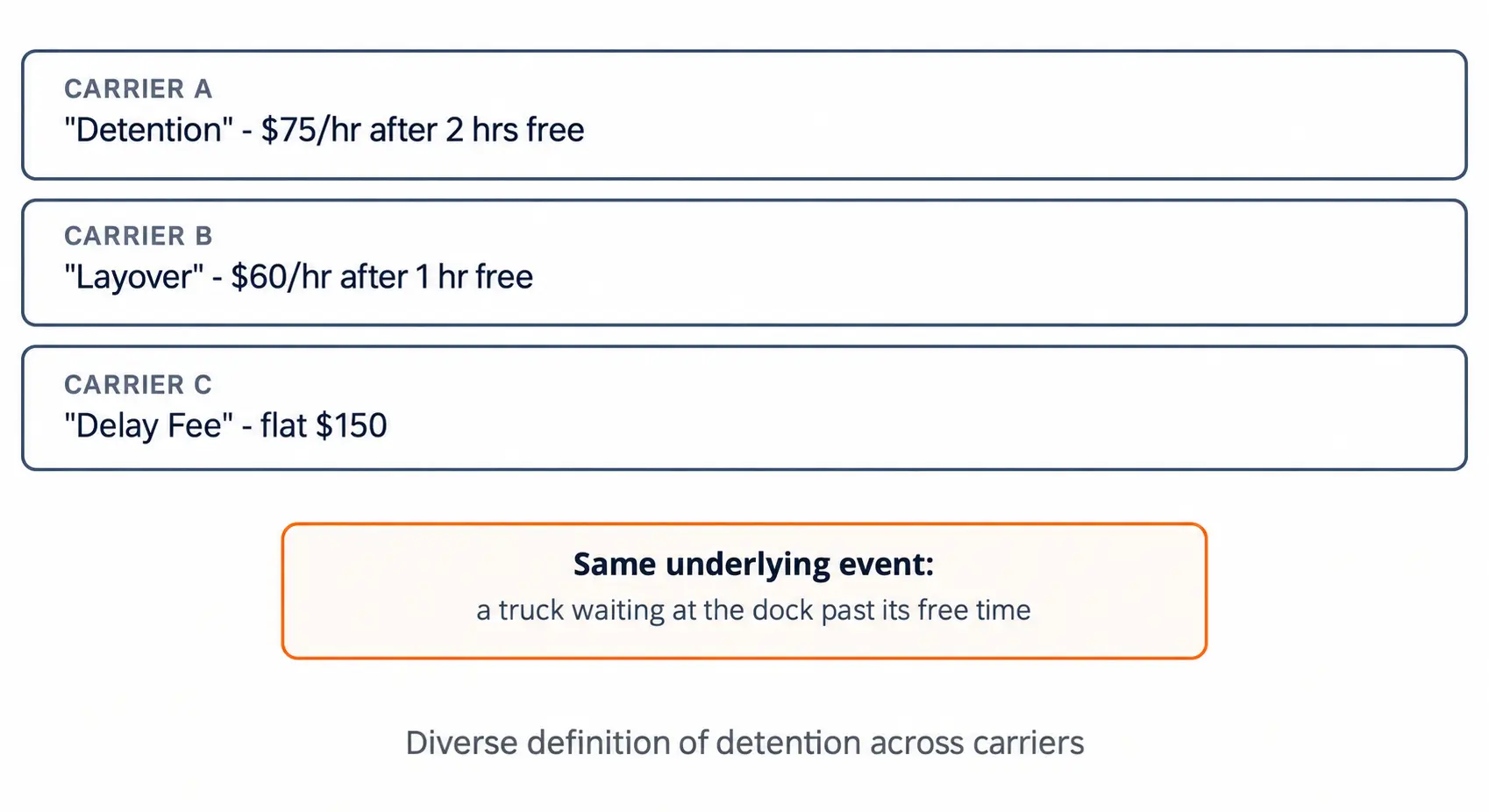
This is why the free-time and rate terms you negotiated so carefully often only get enforced against a fraction of your actual detention charges. Your freight audit process was built to catch one label. Every carrier that bills the same event under a different name is a charge that clears without ever touching your contract terms, and that gap compounds every week you're running lanes with more than one carrier on them.
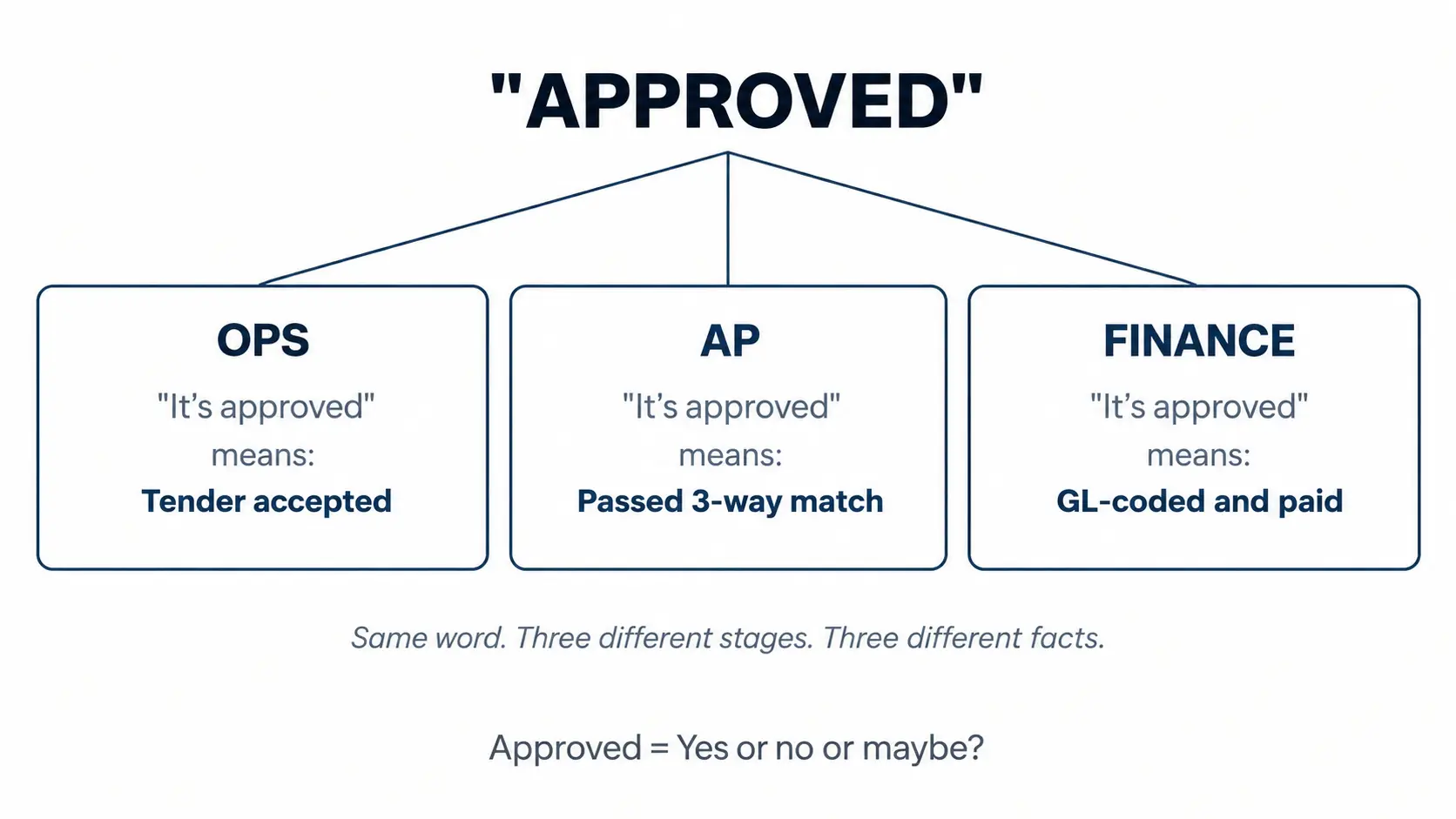
Say "that shipment's approved" out loud in a status meeting and three people will walk away holding three different beliefs about where it actually stands. None of them are wrong, they're just answering different questions with the same word. Multiply that across a few hundred shipments a week and "approved" stops functioning as information at all. It becomes something every team has to re-verify on their own before they can act on it, which defeats the entire point of calling it approved in the first place.
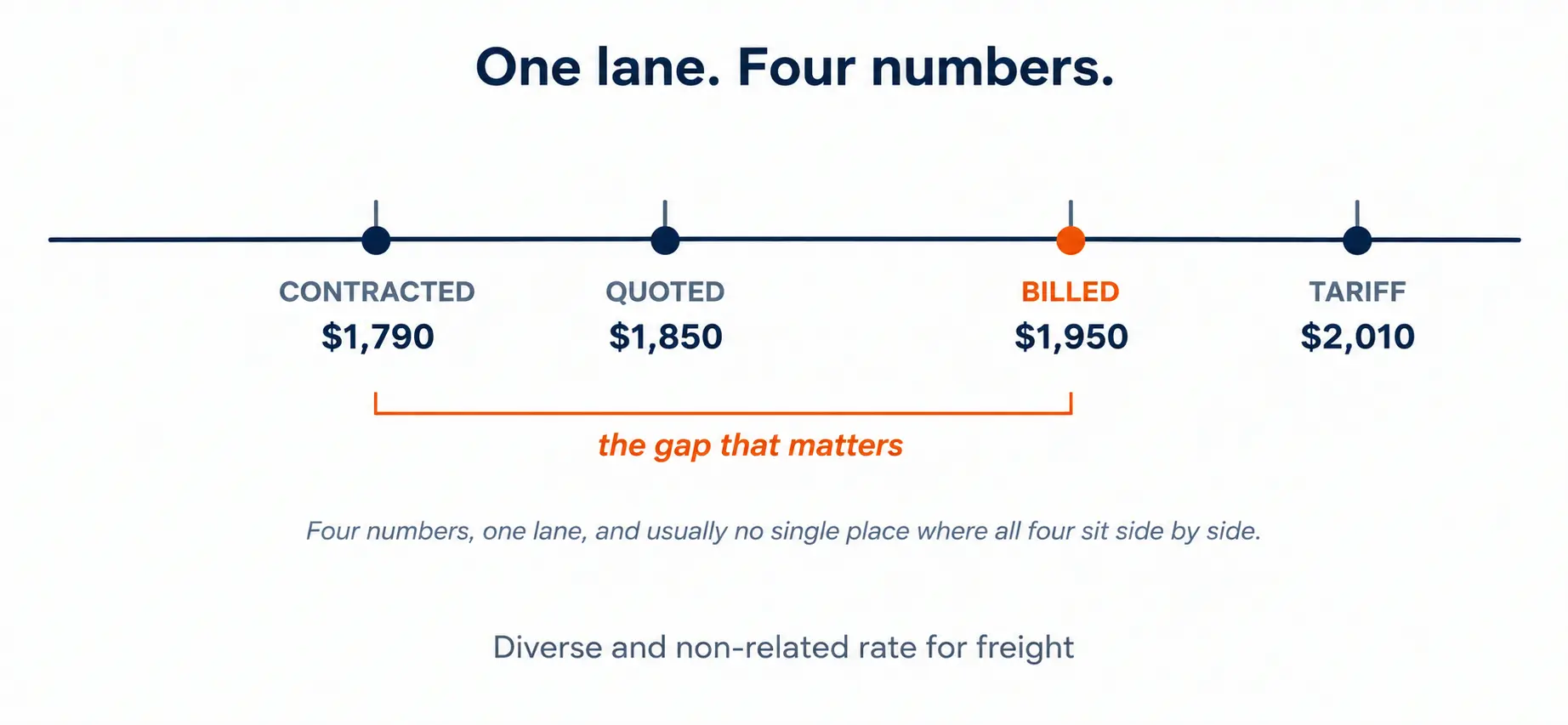
Every one of those four numbers is owned by a different team, sitting in a different system, and none of them are automatically checked against each other. The gap between what you contracted and what you actually got billed is usually where the real dollars leak out of your freight budget, but finding that gap today means someone manually pulling the signed contract to compare it against an invoice, lane by lane, dispute by dispute.
These four gaps are what Level 2 is supposed to close. Right now, they're four separate reasons your freight invoice audit runs on manual reconciliation instead of a shared, governed definition of what "carrier," "detention," "approved," and "rate" actually mean.
For years, this fragmentation cost you time, not money you couldn't recover. An AP analyst gets stuck on a line item, pings ops or a colleague, and eventually someone catches the mismatch. Slow, but self-correcting. A human in the loop is a safety net, even a tired one.
That safety net disappears the moment you hand the reconciling to AI.
An AI model making pay-or-dispute calls on your freight invoices doesn't need a shared definition of "carrier," "detention," "approved," or "rate" to produce an answer. It just needs enough pattern to sound confident. Feed it four systems that don't agree with each other, and it won't slow down or flag the conflict. It will pick one version of the truth, usually whichever one it saw most often in training or in your historical data, and present it with the same certainty whether it's right or catastrophically wrong.
That's the actual risk with AI-driven freight audit, and it's not the one most vendors are selling against. The model itself is rarely the hard part. Getting your own TMS, carrier billing, ERP, and contracts to agree on what they're each talking about is. Skip that step and you haven't automated your freight audit and payment process. You've automated the disagreement, and given it a tone of authority it hasn't earned.
Go back to the truck sitting at the dock three hours late.
With a shared definition layer sitting underneath your TMS, carrier billing, and ERP, that one event resolves the same way everywhere it shows up. Ops's delay log, the carrier's detention charge, and the freight invoice line item all point back to one occurrence, governed by one contract clause, backed by one set of facts. Nobody has to reconcile four stories by hand, because there's only ever one story to begin with.
If the charge is legitimate, it clears without anyone opening four systems to confirm it. If it isn't, the dispute is obvious the moment the invoice lands, not a week later after someone finally tracks down the contract PDF.
This is what FreightFox's Freight IQ and Control Tower are built to do underneath your freight invoice audit and payment process: resolve carrier identity, charge definitions, approval status, and rate to one governed answer before your team or your AI model ever has to guess at what an invoice actually means. Teams running freight audit and payment on that shared layer see freight cost savings of 3 to 5% and cut procurement processing time by up to 70%, because freight invoice reconciliation stops happening invoice by invoice, by hand.
If most of these take you longer than a minute to answer, the gap in your freight invoice audit process isn't automation. It's the shared layer underneath it, and that's worth building before you add more automation on top.
Every example in this piece comes back to the same root cause: your freight invoice touches four systems that were each built to answer their own question, and none of them were built to speak the same language as the others. That's not a technology gap you close by adding another tool on top. It's a translation problem, and right now, your AP team is the translator, working invoice by invoice, dispute by dispute.
Close that gap once, at the definition level, and every system downstream, your TMS, your carrier's billing, your ERP, your contracts, starts reading from the same page. That's the shared language your freight invoices have been missing, and it's worth building before you hand any more of this process to automation that can't tell the difference between agreement and a guess.
FreightFox is a full-stack TMS and Control Tower platform that helps enterprises streamline freight procurement, execution, visibility, settlement, and sustainability—from Procure-to-Pay