

Ask a transporter why a truck was late and the answer is rarely the truck. It's the hours before it, the point where a plant raises a request for a vehicle, waits to hear back, and only finds out there's a problem once the loading dock is already idle.
That request is the indent, and it's where most freight delays actually originate, not in transit. An indent tells a transporter what to move, how much of it, on what lane, and by when. Until that request is raised, confirmed, and matched to an available vehicle, nothing else in the shipment can start: not loading, not billing, not delivery.
This is also where the two sides of a shipment first meet on paper. The shipper wants a vehicle placed against a contracted rate and lane. The transporter is weighing that request against every other indent on its book, deciding which ones to accept, which to push back on, and which to quietly let slip into a costlier spot booking. How that negotiation is handled, on a call and a notebook, or on a system built to track it, decides whether a shipment leaves on schedule or starts the day already behind.
This guide covers what indent management means in a supply chain context, what a transport indent includes, how the process runs step by step, and where manual indenting breaks down compared to a digital process. If you want a way to check your own indent process, the metrics section further down gives you the numbers worth watching.
An indent is a transport request raised against a contracted lane, the formal ask that turns a dispatch plan into an actual vehicle on the ground. Indent management is what happens between that request and a vehicle being placed: raising it, getting a transporter to accept or reject it, and tracking it until the truck shows up.
Four roles sit inside every indent:
What separates an indent from a general booking request is that it isn't a negotiation. Most indents run against pre-agreed lanes, rates, and vehicle types, locked in months earlier through annual procurement and bidding. The indent itself is just an execution of terms both sides already signed off on. If there's a negotiation happening, it happened at the RFQ and contracting stage, not here.
That's also why a rejected indent is worth paying attention to. If a transporter can't cover a contracted lane on a given day, the shipment doesn't disappear, it usually gets covered through a spot booking instead, at whatever rate is available in the moment. Indent management exists to prevent that scramble. Whether it does depends entirely on how fast a rejection surfaces and how quickly the shipper can react to it.
Every field in an indent exists to remove a decision a transporter would otherwise have to make on the fly. Getting this right is most of what makes the transport indent process work smoothly downstream. A complete indent specifies:
Once a transporter accepts, three more fields get added: vehicle number, driver name, and driver contact. That handoff, from a request to an assigned vehicle with a named driver, is what turns the indent into something trackable. Before that point, there's a request. After it, there's a shipment with an owner on both sides.
The quantity and vehicle type fields matter more than they look. A transporter deciding whether to accept an indent is really deciding whether a specific vehicle, one they already have committed elsewhere or sitting idle, can cover it. An indent that specifies a 32-foot truck for 1,600 cases gives a transporter enough to make that call immediately. A vague or incomplete one forces a call back to the shipper to clarify, and that round trip is exactly the delay indent management is supposed to remove.
The indent management process runs through a fixed sequence, and where it stalls tells you exactly where your operation is weak.
Two things break this sequence more than anything else. The first is step 2, a rejection that doesn't get surfaced fast enough leaves a shipper discovering the gap hours later, right when the placement window was supposed to open. The second is step 7, proof of delivery recorded after the fact instead of during unloading, which is when shortage and damage disputes stop being verifiable and start being arguments.
A manual indent process looks simple on a slow day, a dispatcher calls a transporter, gets a yes or no, moves on. The trouble shows up on a busy day, when that same call is repeated across dozens of indents at once. The gap isn't any single step failing, it's volume overwhelming a process built for one conversation at a time.
Digital indent management keeps the same request, acceptance, and tracking steps manual indenting always had. The shift is where that information lives: in one shared system every party can see, instead of in a phone call only two people were part of.
Digital indent management software runs the same request, acceptance, and tracking steps as a manual process, just on a system every party can see instead of in separate phone calls.
Every one of these runs the same process a manual indent already follows, recorded at the point of the action instead of chased down afterward.
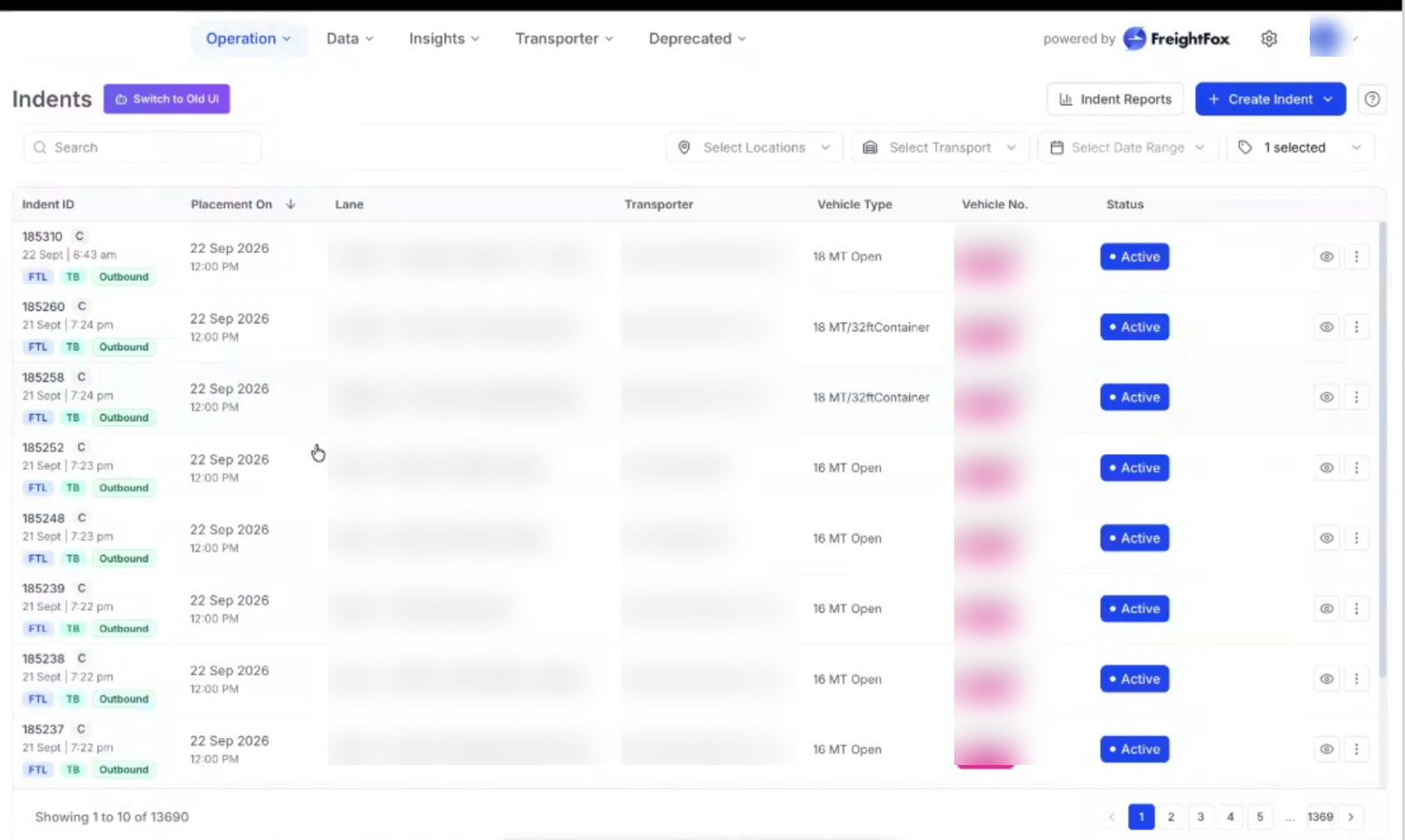
Most of these don't matter individually. They matter as a set, because each one points to a different stage where an indent process tends to break.
Read individually, these are just numbers on a dashboard. Read together, they tell you where in the sequence, from indent placement to gate to loading, time is actually being lost. A high indent failure rate with strong vehicle compliance points to a capacity problem, not a compliance one. A high on-time delivery rate at one origin and a poor one at another means the process itself isn't broken, one plant's execution is.
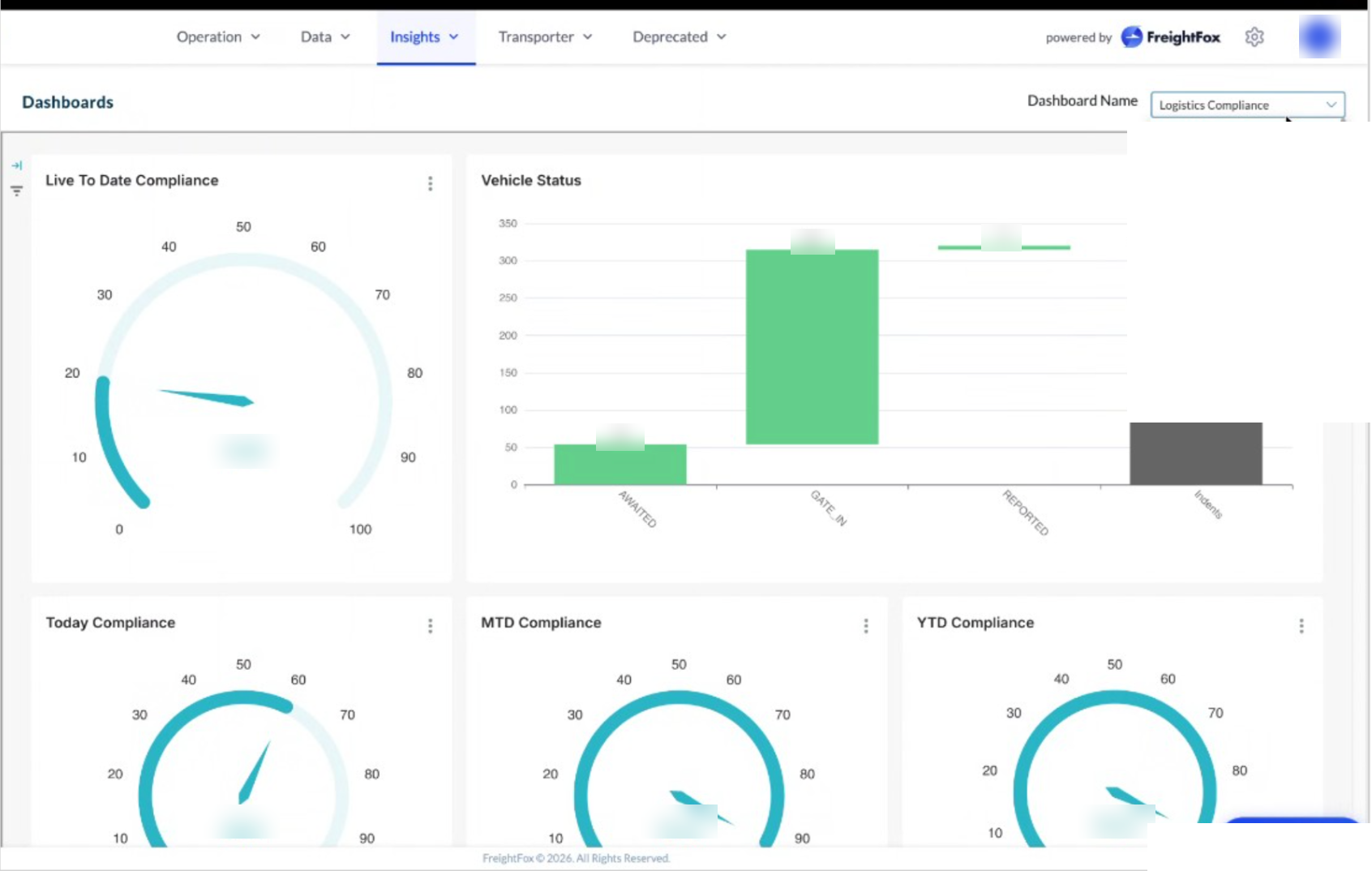
FreightFox digitizes indent creation and approvals, connecting request, acceptance, and tracking on one platform instead of leaving them scattered across calls and spreadsheets. Indents run through to gate management, execution, and digital proof of delivery without needing a separate system for each stage.
Two specific pieces of this, drawn from FreightFox's own platform:
FreightFox integrates with existing ERP systems (SAP S/4HANA, Oracle EBS, Syspro, among others), so adopting indent management on the platform doesn't require replacing what's already running dispatch and finance.
Book a demo to see how this fits your own indent process.
Indent management is the first decision point in every shipment, the step every downstream decision runs through before dispatch planning even begins. Whether that request is raised, accepted, and tracked cleanly determines whether everything downstream, gate-in, loading, delivery, billing, runs on schedule or starts already behind.
Manual and digital indent management run the same steps, request, acceptance, tracking. What separates them is speed: how fast a rejection, a delay, or a status change actually surfaces, in minutes on a shared system, or hours later on a phone call. That gap is what shows up in your metrics: indent failure rate, gate turnaround, on-time delivery by origin. Each one is a read on how fast information moves through your process, not just whether the process technically works.
If you're evaluating your own indent management setup, the metrics in this guide are a reasonable place to start checking, and where those gaps show up will tell you exactly which part of the process needs fixing first.
FreightFox is a full-stack TMS and Control Tower platform that helps enterprises streamline freight procurement, execution, visibility, settlement, and sustainability—from Procure-to-Pay